




Programmed genome
rearrangements
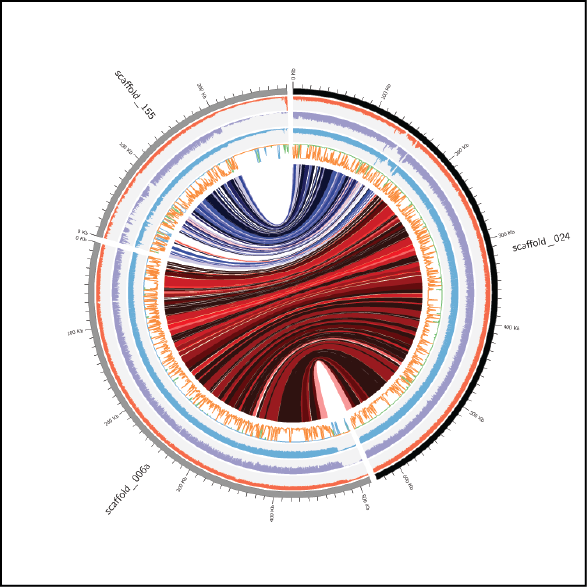
Chromosome rearrangements can compromise genome integrity. Programmed rearrangements nevertheless take place during physiological processes, such as antibody gene assembly in immune cells. Using the ciliate Paramecium tetraurelia as a model, we study the contribution of transposable elements and DNA double-strand break repair pathways to the developmentally programmed elimination of germline DNA.
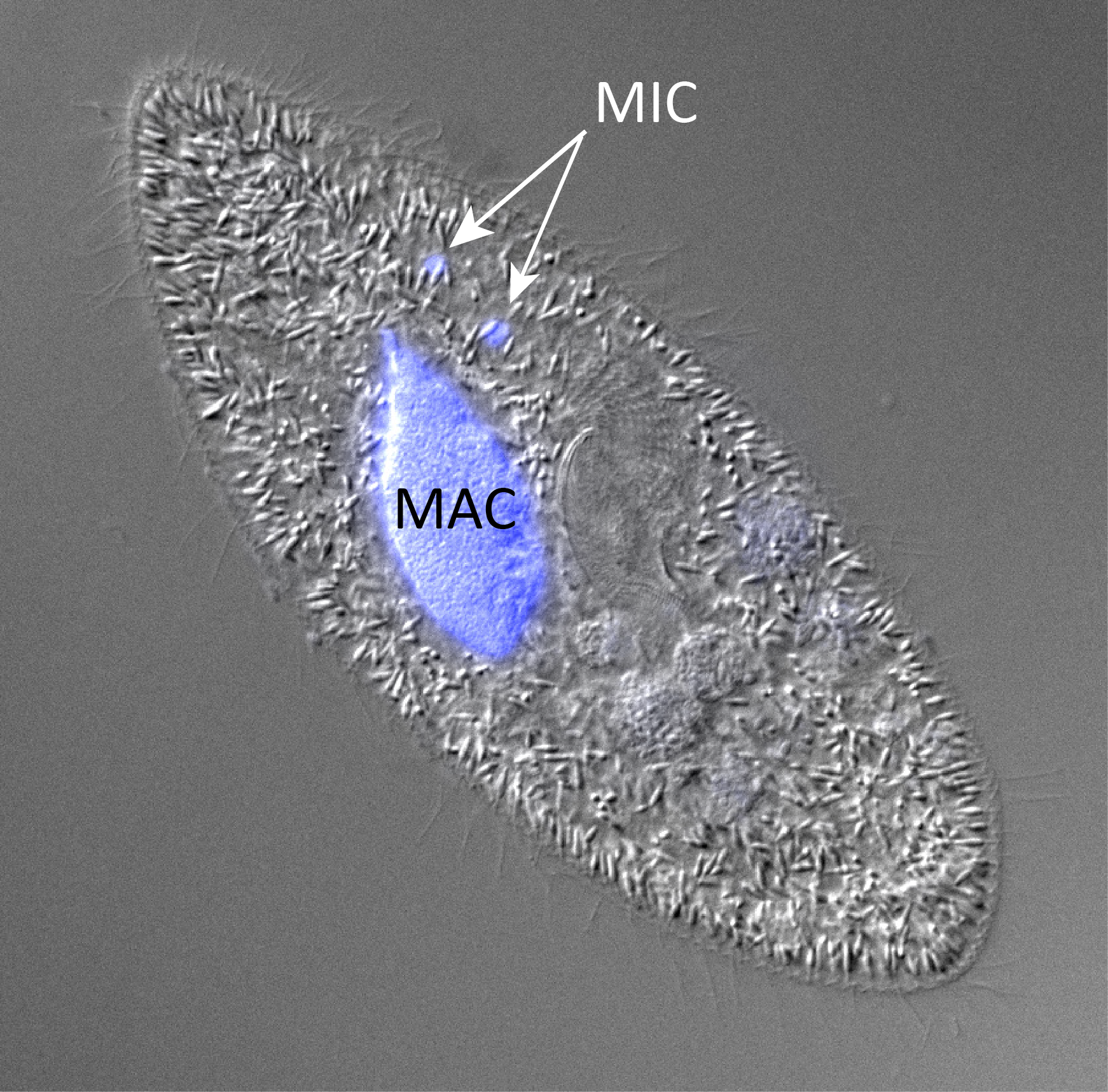
Paramecium as a model
Programmed genome rearrangements
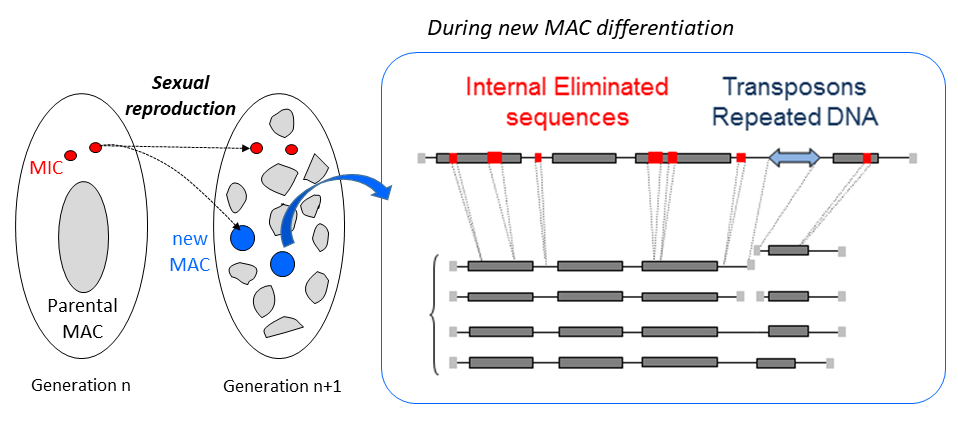
We study programmed genome rearrangements in a model species: Paramecium tetraurelia, which carries a ~100 Mb germline genome. During MAC development, the genome undergoes multiple rounds of endoreplication. Concomitantly, massive programmed genome rearrangements eliminate at least 25 to 30% of germline DNA. These rearrangements include (i) removal of repeated sequences (transposons, minisatellites), leading to chromosome fragmentation or heterogeneous internal deletions and (ii) excision of ~ 45,000 short, single copy and noncoding sequences scattered throughout the genome (IES, or internal eliminated sequences). Precise IES excision is necessary to reconstitute functional open reading frames. At least a fraction of Paramecium IESs are the degenerate remnants of transposons related to the Tc/mariner family.
Topics
team

Group Leader Senior Researcher

Researcher

Associate Professor

Emeritus Researcher

Engineer

Engineer assistant

Bachelor Student
Master Student
Latest publications
For all the publications of the Team click on the button below.
External funding

PACTE
(Paramecium Analysis of Chromosome inTeractions during genome Elimination)
(2026-2027)
Principal Investigator: Olivier Arnaiz

PACTE
(Paramecium Analysis of Chromosome inTeractions during genome Elimination)
(2026-2027)
Principal Investigator: Olivier Arnaiz

ANR CURE
(2021-2026)
Principal Investigator: Mireille Bétermier

Equipe labellisée FRM
(2021-2025)
Principal Investigator: Mireille Bétermier