


2026
Summary
- How does it end ? Helitrons cap germline chromosomes of Paramecia
- How bacterial pathogens hijack host carbon: Insights from TnSeq metabolic network analysis
- A new training reference for unix skill in bioinformatics
- The Rapid Mechanically Activated channel transduces increases in plasma membrane tension into transient calcium influx
- Programmed DNA Elimination in Paramecium: towards the third dimension
- Iron Sulfides Produced by Thermococcales: An Iron Detoxification Mechanism
- The tRNA moieties of both aminoacyl-tRNA substrates of a cyclodipeptide synthase share a common binding site, as revealed by RNA microhelices mimicking tRNA acceptor arms.
- A new-engineered integrative tool to target the terminal compartment of the Streptomyces chromosome.
- Phosphatidylserine dynamics between the endoplasmic reticulum and the plasma membrane in Saccharomyces cerevisiae
- Snapshots of cotranslational N-myristoylation reveal NMT as a ribosome-associated chaperone
- Crosstalk between cohesins and axis proteins determines meiotic chromosome architecture in Sordaria macrospora
- Flexizyme-Based Strategy for the Synthesis of Stable, Non-Isomerizable Amide-Linked 2’-Aminoacyl-tRNAs and their Shortened Analogs
- Impact of GC content on de novo gene birth
- Team of J. Soutourina received the label from Ligue Nationale contre le cancer
- Actomyosin-dependent assembly of the mechanosensitive machinery from adherens junctions triggers actin polymerization and organization
- The heme A synthase Cox15, as a target of redox-active 3-benzylmenadiones with antiparasitic activity
- How virulence genes reorganize the Salmonella genome
- Gain and loss of gene function shaped the nickel hyperaccumulation trait in Noccaea caerulescens
- Cross-regulation of iron-sulfur cluster biosynthesis by frataxin and ferredoxin-2
How the polarisability of its environment shapes the electronic excited states of lutein, a key pigment of photosynthesis
Physical Chemistry Chemical Physics
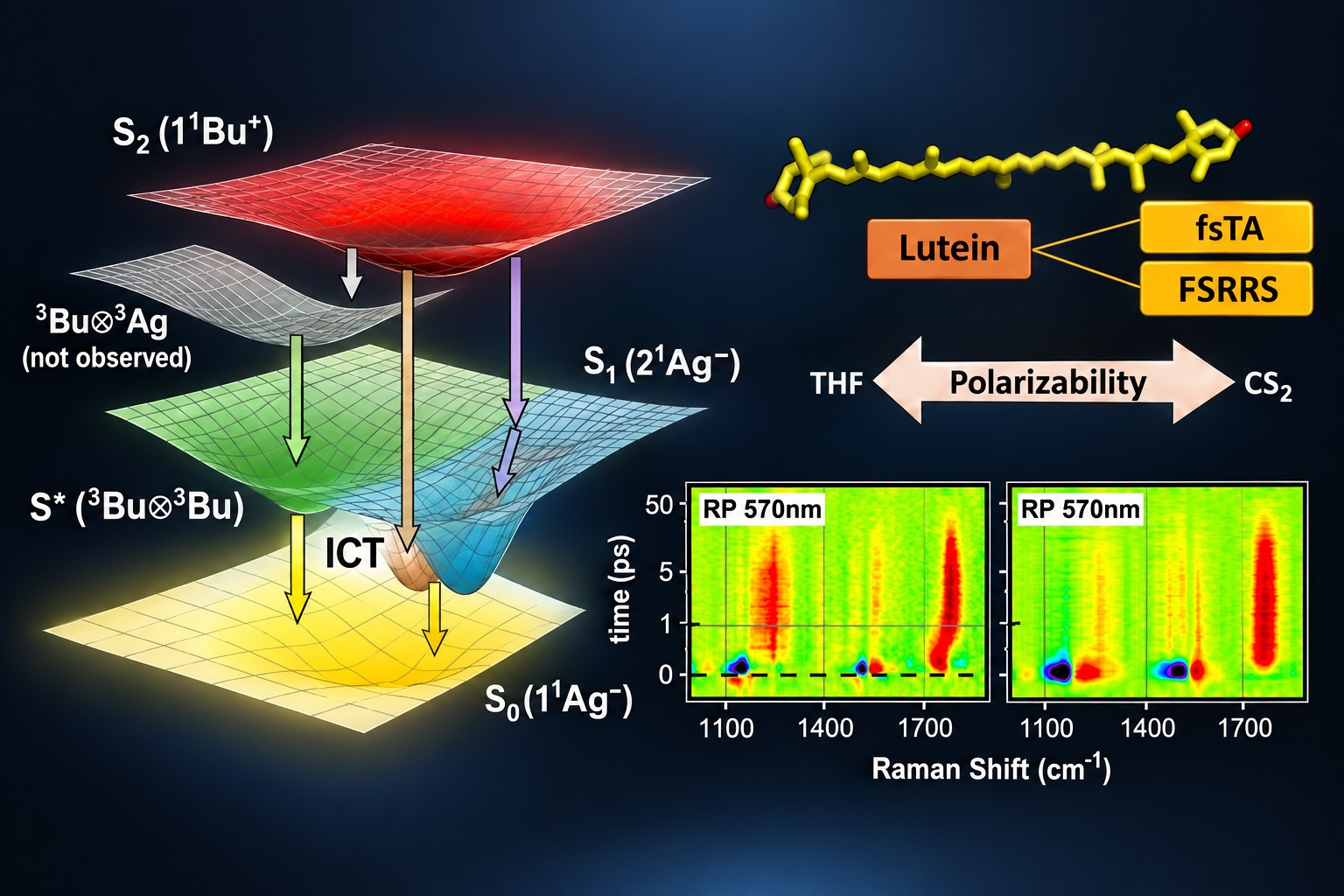
Lutein helps plants harvest sunlight and protect themselves from excess light. Ultrafast laser spectroscopy at I2BC shows that the polarisability of its environment reshapes its electronic excited states and their lifetimes.
In plant leaves, lutein, a yellow carotenoid also abundant in spinach and egg yolk, is bound to the proteins that collect sunlight for photosynthesis. It helps capture light, stabilises these proteins and, under strong illumination, contributes to dissipating excess energy safely. All these functions rely on the electronic excited states that lutein reaches after absorbing a photon, which last only a few picoseconds (trillionths of a second). Inside these proteins, lutein is thought to sit in a highly polarisable environment, that is, one whose electron clouds readily deform in response to the pigment. How this polarisability affects its excited states was unknown.
I2BC researchers compared lutein in two solvents of very different polarisability: tetrahydrofuran (THF, low) and carbon disulfide (CS2, high). Combining femtosecond transient absorption with femtosecond stimulated resonance Raman spectroscopy (FSRRS), which selectively records the vibrational fingerprint of each electronic state, they identified the same set of excited states in both solvents: a vibrationally ‘hot’ S1 state, the relaxed S1 state, a weak charge-transfer contribution and a ‘dark’ state called S*. High polarisability, however, changes how these states behave. The S1 absorption shifts to lower energy and broadens, and the molecule barely reorganises after excitation. The S* state lives almost twice as long (about 29 instead of 16 picoseconds), and its vibrational frequency deviates from the trend expected from the length of the conjugated chain.
Polarisability therefore does not simply lower the energy of the excited states: it alters their nature and dynamics. These results provide a reference for understanding how the protein environment tunes the excited states of lutein, and thus its roles in light harvesting and photoprotection.
More information: https://doi.org/10.1039/d6cp01897a
Contact: Manuel LLANSOLA-PORTOLES <manuel.llansola@i2bc.paris-saclay.fr>
New player identified in H. pylori natural transformation
PLOS Pathogens
Identification of a Missing Component of the Exogenous DNA Internalisation System During Natural Transformation in Helicobacter pylori.
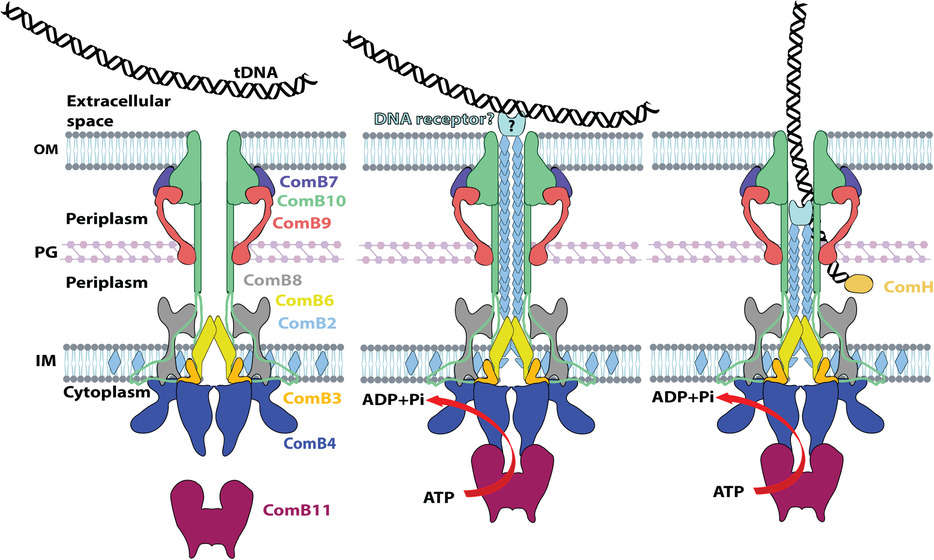
Horizontal gene transfer plays a crucial role in the evolution of bacterial populations. In pathogens, it promotes the spread of antibiotic resistances and virulence factors. Helicobacter pylori, a bacterium infecting the stomach of 50% of the world’s population and responsible for the majority of gastric ulcers and cancers, has a remarkable capacity to exchange genes via natural transformation. Through this pathway, bacteria can capture and incorporate into their genome DNA present in their environment. To do this, H. pylori uses an atypical DNA uptake system: a type 4 secretion system (T4SS) named ComB, rather than the pilus present in all other naturally transformable bacteria. Compared to classical T4SS, certain components appeared to be absent from this system.
In a study published in PLoS Pathogens, researchers from the Department of Cellular and Molecular Radiobiology (François Jacob Institute of Biology, CEA/UPSaclay, UP Cité, Fontenay aux Roses) and I2BC (CEA/CNRS/UPSaclay, Gif-sur-Yvette), in collaboration with a laboratory at the Pasteur Institute, identified an ATPase essential for this secretion system. Homology searches detected a gene, located outside the known operons of the ComB complex, capable of encoding an ATPase associated with a T4SS. Genetics and biochemistry experiments demonstrated that the protein encoded by this gene, designated as ComB11, is indeed an ATPase essential for natural transformation of H. pylori. Structural modelling revealed an interaction between this ATPase and the ComB4 component of the ComB system, confirming its membership in this atypical T4SS.
More information: https://dx.plos.org/10.1371/journal.ppat.1014140
Contact: Jessica Andreani <jessica.andreani@i2bc.paris-saclay.fr>
A new path to Rubisco processing
Sciences Advances
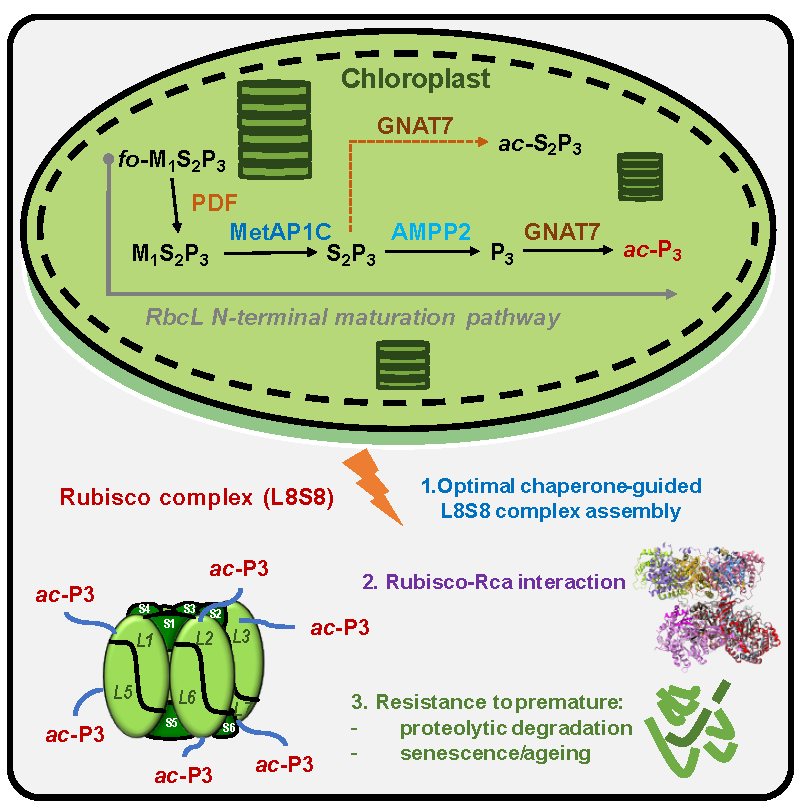
A unique plant machinery comprising three dedicated components ensures N-terminal processing of Rubisco’s catalytic subunit, enabling its proper accumulation and activity as Earth’s most abundant protein.
RuBP carboxylase/oxygenase (Rubisco)—the central enzyme of carbon dioxide assimilation and plant autotrophy— is Earth’s most abundant protein and a major carbon and nitrogen reservoir, which can be remobilized during stress and development. The catalytic large subunit of Rubisco (RbcL) undergoes a highly conserved maturation process that results in N-terminal proline acetylation, a modification not reported in other biological systems. Until now, both the enzymatic machinery responsible for N-terminal maturation and its associated functional implications have remained unknown. In this study, we uncover a specialized chloroplast processing pathway, composed of two aminopeptidases and one N-terminal acetyltransferase, specifically evolved to catalyze RbcL maturation. Proper processing of RbcL by this machinery is tightly coupled to chaperone-mediated assembly of the hexadecameric holoenzyme, enhances activation by Rubisco activase, and safeguards the fully modified complex from premature degradation during senescence. Disruption of this pathway compromises both the reactivity and accumulation of Rubisco. These findings reveal a specialized maturation mechanism that underpins the exceptional abundance and persistence of Rubisco in photosynthetic organisms, and more broadly, its central role in sustaining life on Earth. This paves the way for enhanced photosynthesis, stronger crop yields, and more effective carbon capture.
More information: https://www.science.org/doi/full/10.1126/sciadv.aeh5060
Contact: Thierry MEINNEL <thierry.meinnel@i2bc.paris-saclay.fr>
Targeted genome editing of the non-model cyanobacterium Cyanothece PCC 7425 via CRISPR/Cas12a
Appl Microbiol Biotechnol
Unlocking Genetic Engineering in the CaCO3 / SrCO3 granule forming Cyanothece PCC 7425.
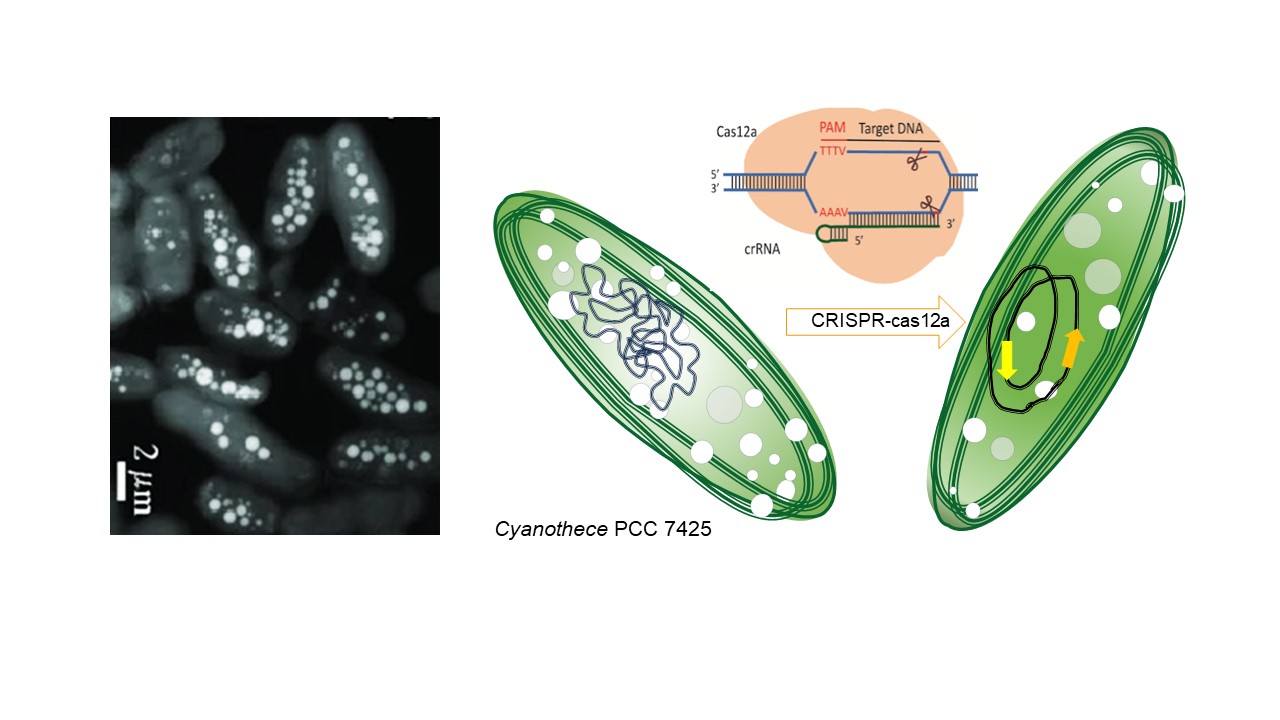
Cyanobacterial biodiversity represents an outstanding reservoir of biological diversity with considerable potential for addressing challenges in diverse fields, ranging from human nutrition and health to sustainable production of energy and environmental bioremediation. Among non-model cyanobacteria, several species, including Gloeomargarita lithophora and Cyanothece PCC 7425 are distinguished by their remarkable ability to form intracellular CaCO3 granules within the cytoplasm (iACC). In addition to accumulating high levels of calcium (Ca), these cyanobacteria can concentrate other alkaline earth elements, including strontium (Sr), barium (Ba), and radium (Ra). This unique capacity makes them promising candidates for a range of biotechnological applications, notably CO2 capture and sequestration, and bioremediation of nuclear effluents. However, the absence of efficient genetic tools for iACC forming cyanobacteria has been a major obstacle to investigating the molecular mechanisms underlying iACC formation. To address this limitation, the Biology and Biotechnology of Cyanobacteria team at I2BC, CEA Saclay, in collaboration with Biomin team from IMPMC Sorbonne University has established a genetic toolbox for Cyanothece PCC 7425 enabling both gene overexpression and CRISPR-Cas-mediated gene inactivation 1. These advances provide, for the first time, a powerful experimental framework to dissect the molecular basis of iACC formation and pave the way toward a deeper understanding of this unique biomineralization process. The team, using CRISPR-Cas12a mediated homologous recombination, generated deletion mutants of genes acting in metabolism and/or response to stresses. Importantly, full chromosome segregation was rapidly achieved making selection of null-mutants very effective in this cyanobacterium. With these tools in hand, the team now aims to elucidate the molecular basis of iACC mechanisms and the formation of CaCO3 / SrCO3 granules.
More information: https://link.springer.com/article/10.1007/s00253-026-13959-y
Contact: Soufian OUCHANE <soufian.ouchane@i2bc.paris-saclay.fr>
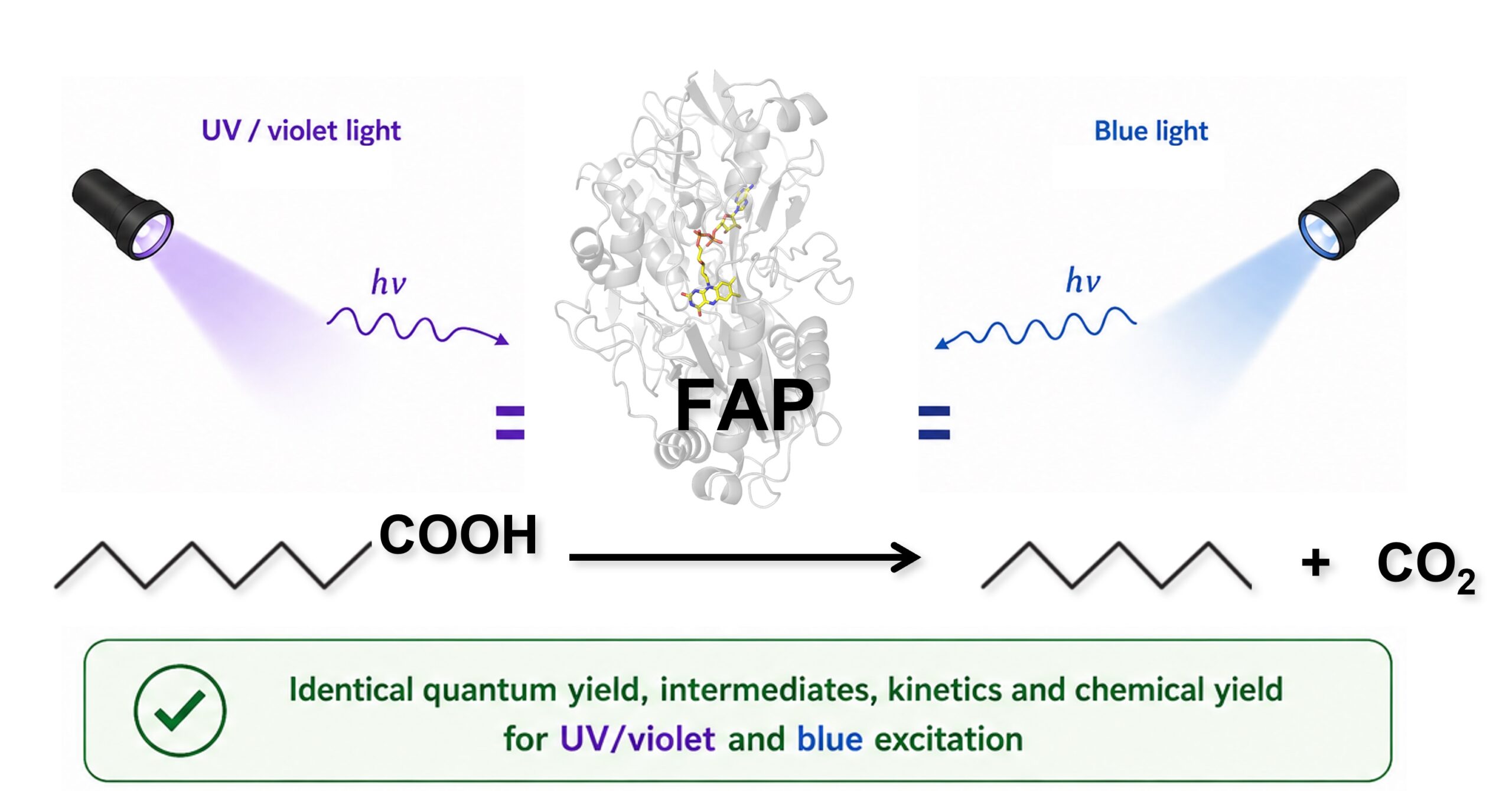
Different Photons, Same Chemistry: Identical Mechanism and Efficiency of Fatty Acid Photodecarboxylase under Blue and UV Excitation
ACS Catalysis
Blue or violet, FAP plays by the same rules: both wavelengths trigger the same photocycle with identical efficiency, intermediates, and products, overturning the proposed model of violet-enhanced activity.
Fatty acid photodecarboxylase (FAP) is a promising photoenzyme for light‑driven hydrocarbon synthesis and a versatile chassis for photobiocatalysis. A recent study proposed that UV/violet illumination enhances FAP activity relative to blue light by accessing a distinct, more efficient photochemical regime. Here, steady-state and time‑resolved fluorescence, transient absorption spectroscopy under single‑turnover conditions, and product quantification under continuous irradiation show that the quantum yield of decarboxylation, the identities and kinetics of reaction intermediates, and the overall chemical yield are identical for blue and UV/violet excitation. These findings establish that FAP operates through a single, wavelength‑independent photocycle, overturning the proposed “violet‑enhanced” reactivity model.
More information: https://doi.org/10.1021/acscatal.6c04891
Contact: Pavel Muller <pavel.muller@i2bc.paris-saclay.fr>

Structural analysis reveals how Ku recruits and stimulates WRN
Nature Communication
Combining cryo-EM, biochemistry and cell biology, this study reveals how the DNA repair factor Ku recruits and activates the WRN exonuclease, uncovering a new mechanism that protects genome stability during replication stress.
The Werner syndrome protein (WRN) is a key factor in the maintenance of genome stability, but the molecular mechanisms regulating its exonuclease activity have remained unknown. In this study, we combine cryo-electron microscopy, biochemistry, and cell biology to uncover how the DNA repair factor Ku recruits and stimulates WRN.
Our structural analysis reveals the molecular interface between the Ku70–Ku80 heterodimer and the WRN exonuclease domain, explaining how Ku positions WRN at DNA ends to stimulate its exonuclease activity. Biochemical assays demonstrate that Ku directly enhances WRN-mediated DNA degradation in vitro. In cells, disruption of the Ku–WRN interaction impairs WRN recruitment to DNA double-strand break (DSB) sites and compromises replication fork remodeling under replication stress, highlighting the physiological importance of this interaction.
Together, these findings demonstrate that Ku directly regulates WRN exonuclease activity and clarify the molecular basis of WRN recruitment and activation at DNA ends, providing new insights into DNA end processing and the response to replication stress.
More information: https://www.nature.com/articles/s41467-026-71888-w
Contact: Virginie ROPARS <virginie.ropars@i2bc.paris-saclay.fr>

Reassessing Carotenoid Photophysics: Shedding Light on Dark States
Journal of the American Chemical Society
The dark excited states of carotenoids have been debated for decades. Researchers at I2BC now use femtosecond stimulated resonance Raman spectroscopy to determine the nature and symmetry of three of them, resolving controversies that have long obscured our understanding of photosynthetic light harvesting.
Carotenoid molecules are critical in photosynthesis, performing functions at the heart of both light-harvesting and photoprotection. As both these processes involve excitation energy transfer, fully understanding them requires a precise description of the electronic states involved. The excited-state manifold of carotenoids is not yet fully characterised, and includes several dark electronic states that remain elusive. Using femtosecond stimulated resonance Raman spectroscopy, where the vibrational contributions of each excited state can be observed selectively as a function of the Raman excitation, we reveal the nature and symmetry of no less than three different dark states. These results end long-standing controversies in carotenoid research, shining new light on the photophysics of these essential molecules and establishing a spectroscopic framework for characterising their multiple roles.
More information: https://pubs.acs.org/doi/10.1021/jacs.6c03864
Contact: Manuel J. Llansola-Portoles <manuel.llansola-portoles@i2bc.paris-saclay.fr>

Assembly of viral particles in situwithin the compartmentalized bacterial host cell
Nature Communication
Integrative structural analysis by cryoFIB-milling and cryoET shows how siphovirus SPP1 reoganized the bacterial cytoplasmic space during infection to confine stepwise assembly of viral particles starting from procapsid formation at the plasma membrane.
Here, an optimized workflow of cryoFIB-milling and cryoET combined with genetics was used to investigate siphovirus SPP1-induced spatial reorganization of the Bacillus subtilis host cell under near-native conditions. The most prominent feature is formation of a membrane-less viral DNA compartment where DNA transations take place and from which ribosomes are excluded. Imaging of viral particle assembly intermediates showed that stepwise individual assembly process correlates with a specific spatial partitioning in the infected and reorganized bacterium. Notably, specific open precursors of the viral procapsid are found at the cytoplasmic membrane. These unprecedented structures support a mechanism in which a portal protein bound to the inner membrane serves to initiate unidirectional co-polymerization of scaffolding and major capsid proteins that build a curvilinear lattice. Closure of the procapsid around the portal promotes departure from the membrane to the viral DNA compartment where DNA packaging takes place. Next DNA-filled capsids leave the compartment for tail binding and storage in so-called warehouses. Collectively, the work provides comprehensive mechanistic insights into the complete viral assembly pathway of SPP1 in the restructured infected cell. Characterization of short-lived and transient stages of assembly, inacessible to purification for structural analysis in vitro, highlight the importance of the emerging field of cellular structural biology to improve our understanding of virus-host interactions.
More information: https://www.nature.com/articles/s41467-026-71181-w
Contacts: Emmanuelle Quemin <emmanuelle.quemin@i2bc.paris-saclay.fr> & Paulo Tavares <paulo.tavares@i2bc.paris-saclay.fr>

New Release:
Génomes: la construction du vivant
CNRS EDITIONS
From DNA sequencing and studies of genome function and organization—covering viruses, bacteria, archaea and eucaryotes, this collective book explores genomes and their role in life, evolution, and diversity.
A collective book that traces the history of genetics and the major discoveries surrounding genomes. The genome, the complete set of genetic information, builds, operates, and reproduces all living beings, serving as the engine of their evolution. Thanks to DNA, genetic information is stored, decoded, duplicated, and transmitted. But the study of the genome goes much further: it allows us to understand life, trace the history of species, and identify non-coding DNA regions that are nonetheless essential for life, the protection of genetic material, and its diversity. From DNA sequencing and genome function to the mechanisms of evolution—covering viruses, bacteria, archaea and eucaryotes, —the book explores how scientists today are striving to understand genome function and evolution.
Coordinated by Frédéric Boccard, Director of the I2BC, this book brings together chapters written by several French scientists, including Mireille Bétermier, Group Leader at the I2BC.
More information: https://www.cnrseditions.fr/catalogue/biologie-et-sante/genomes/
Contact: Frédéric Boccard <frederic.boccard@i2bc.paris-saclay.fr>

The final of the interuniversity 3-Minute Thesis (3MT®) competition
Linnéa Strandberg, PhD student from Photobiology, Photosynthesis, Photocatalysis team in I2BC, will present her thesis project “When breaking the heart of a plant”.
The Institut Polytechnique de Paris will host the final of the interuniversity 3-Minute Thesis (3MT®) competition. Developed by The University of Queensland, the 3MT® is more than a competition—it’s a platform for PhD students to strengthen their communication skills in english and share their research with a non-specialist audience in a clear and engaging manner.
Join on June 25, from 2:00 pm to 4:00 pm at Télécom Paris (Thévenin lecture hall) to support the finalists and vote for the Audience Award (free registration required):
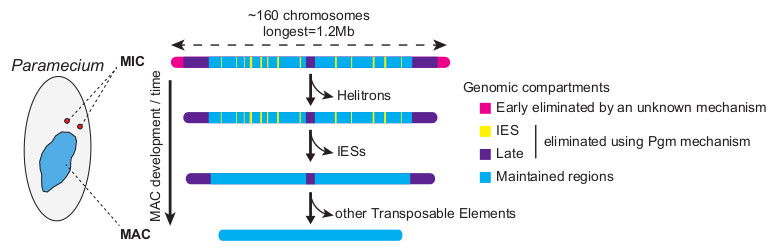
How does it end ? Helitrons cap germline chromosomes of Paramecia
BMC Biology
The numerous tiny germline chromosomes of Paramecia end in DNA segments produced over evolutionary time by the activity of Helitron mobile elements. These chromosome ends are eliminated during development of the individual by a novel mechanism.
Many eukaryotes are able to eliminate chromosome segments or even entire chromosomes during somatic differenciation. This programmed DNA elimination process illustrates eukaryotic genome plasticity and raises questions about the underlying molecular mechanisms. Among the unicellular ciliated protozoans, which include paramecia, the somatic and germline fonctions of chromosomes are separated in two distinct nuclei. The diploid germline nucleus (MIC, ~ 100 Mb in Paramecium) undergoes meiosis and transmits the genetic information between generations. The polyploid somatic nucleus (MAC, ~ 70 Mb) is responsible for gene expression, but is destroyed at each generation, when a new MAC develops from a copy of the MIC. Identification of the sequences that undergo programmed DNA elimination requires knowledge of the MIC genome sequence. More than 10 years of research involving several University Paris-Saclay teams and platforms has provided chromosome-scale assemblies of MIC DNA for 7 members of the Paramecium aurelia species complex and a telomere-to-telomere assembly for one of them, P. tetraurelia. The authors show that the MIC genome consists of around 160 tiny chromosomes (300 kb – 1.2 Mb) with the highest meiotic recombination rate ever reported (420 cM/Mb). The assembly revealed that the germline chromosome ends are eliminated very early during MAC development by a mechanism different from that known to be involved in elimination of other sequences. This terminal genomic compartment contains a new clade of transposable elements (TE) that belong to the Helitron superfamily. These TE are very ancient (having diverged from other Helitron-like elements at the base of the eukaryotic tree) but have remained active in Paramecia. They appear to preferentially insert into telomeric repeats. One exciting perspective of the study is the elucidation of a novel DNA elimination pathway.
More information: https://link.springer.com/article/10.1186/s12915-026-02584-w
Contacts: Linda SPERLING <linda.sperling@i2bc.paris-saclay.fr> & Olivier Arnaiz <olivier.arnaiz@i2bc.paris-saclay.fr>
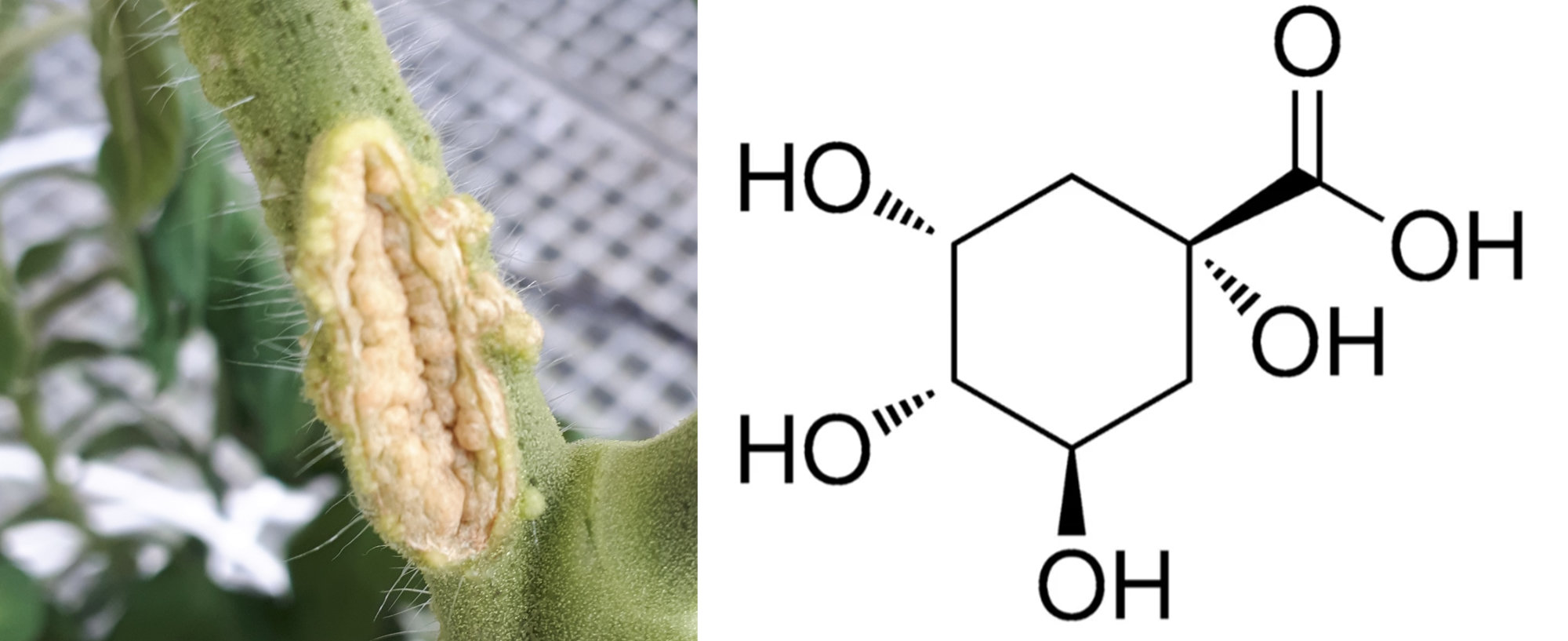
How bacterial pathogens hijack host carbon: Insights from TnSeq metabolic network analysis
Environmental Microbiology
We uncovered how Agrobacterium tumefaciens exploits host carbon resources to colonize tomato, revealing quinic acid catabolism as the critical driver of its gall-specific fitness.
Agrobacterium tumefaciens is a facultative plant pathogen that forms galls on a wide range of hosts and persists in soil, roots and galls through extensive metabolic versatility. Here, we combined genome-wide transposon sequencing (TnSeq), metabolomics and reverse genetics to identify carbon utilisation pathways supporting A. tumefaciens fitness in tomato roots and galls. TnSeq screening across 21 carbon sources, representative of rhizosphere exudates, root metabolites and gall-derived compounds, identified conserved and substrate-specific fitness determinants, including central metabolic enzymes, transporters and previously uncharacterized catabolic genes. Comparison with in planta TnSeq data revealed environment-dependent metabolic requirements, highlighting fluxes through the Entner–Doudoroff pathway, the TCA cycle and gluconeogenesis. Quinic acid catabolism emerged as a major determinant of fitness specifically in galls, where this compound accumulated. Deletion of pcaC (ATU_RS21295/atu4541) impaired growth on quinic and protocatechuic acids and reduced competitiveness during gall colonisation, with no effect in roots. Together, this work provides a system-level framework for understanding how A. tumefaciens exploits plant-derived nutrients in host-associated environments.
More information: https://doi-org.insb.bib.cnrs.fr/10.1111/1462-2920.70311
Contact: Denis FAURE <denis.faure@i2bc.paris-saclay.fr>
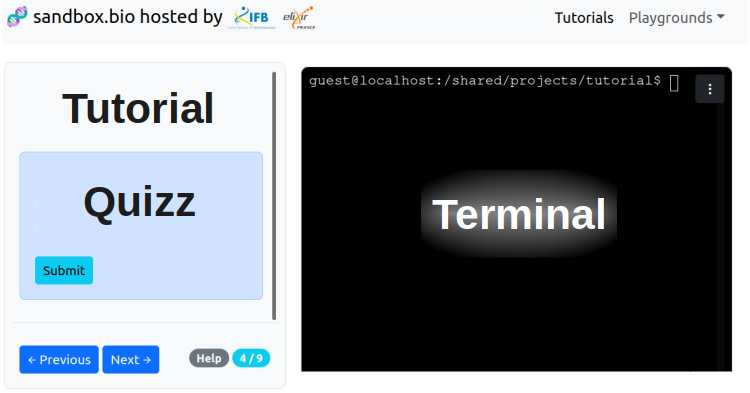
A new training reference for unix skill in bioinformatics
PLOS Computational Biology
Master Unix for bioinformatics with a free, progressive skills sheet and interactive Sandbox.bio tutorials—no install needed!
As data generation in life and health sciences accelerates, mastering core bioinformatics skills—especially Unix command-line proficiency—has become essential. In response, the e-learning working group of the IFB (Institut Français de Bioinformatique), in which Claire Toffano-Nioche from the BIOI2 facility of I2BC participates, developed a progressive Unix skill sheet tailored for life scientists with little or no prior experience, recently published in PLoS Comput Biol. This skills sheet summarises the most commonly used Unix commands in the field of bioinformatics. Skills are organised according to increasing levels of difficulty and thematic groups and are cumulative, meaning that skills acquired at a given level are required at the next level. Each skill has been defined operationally by following Bloom’s taxonomy of learning objectives. This framework can be freely reused (CC BY 4.0) – by learners as well as tutors – and serves as inspiration for defining the competencies or prerequisites of a training course, or for evaluating the level of a student.
Following this sheet, the e-learning working group directly implemented progressive, interactive sessions that can be used for self-paced learning or in classroom settings. These sessions are deployed via Sandbox.bio, an open-source platform leveraging WASM (WebAssembly) technology. This ensures seamless access from any browser—no installation required—while enabling computations to run locally on the user’s machine.
To further support self-paced learning, BIOI2 also offers autotraining course materials on their website (https://bioi2.i2bc.paris-saclay.fr). These resources draw inspiration from—and contribute back to—multiple open courses, including those from the IFB, creating a collaborative cycle of shared knowledge and continuous improvement.
More information: Link towards the article: https://doi.org/10.1371/journal.pcbi.1014133
Link towards sandboxbio IFB: https://sandboxbio.france-bioinformatique.fr/
Link towards the skill sheet: https://zenodo.org/records/18686109
Link towards BIOI2 training page: https://bioi2.i2bc.paris-saclay.fr/training/
Contact: contact-bioi2@i2bc.paris-saclay.fr
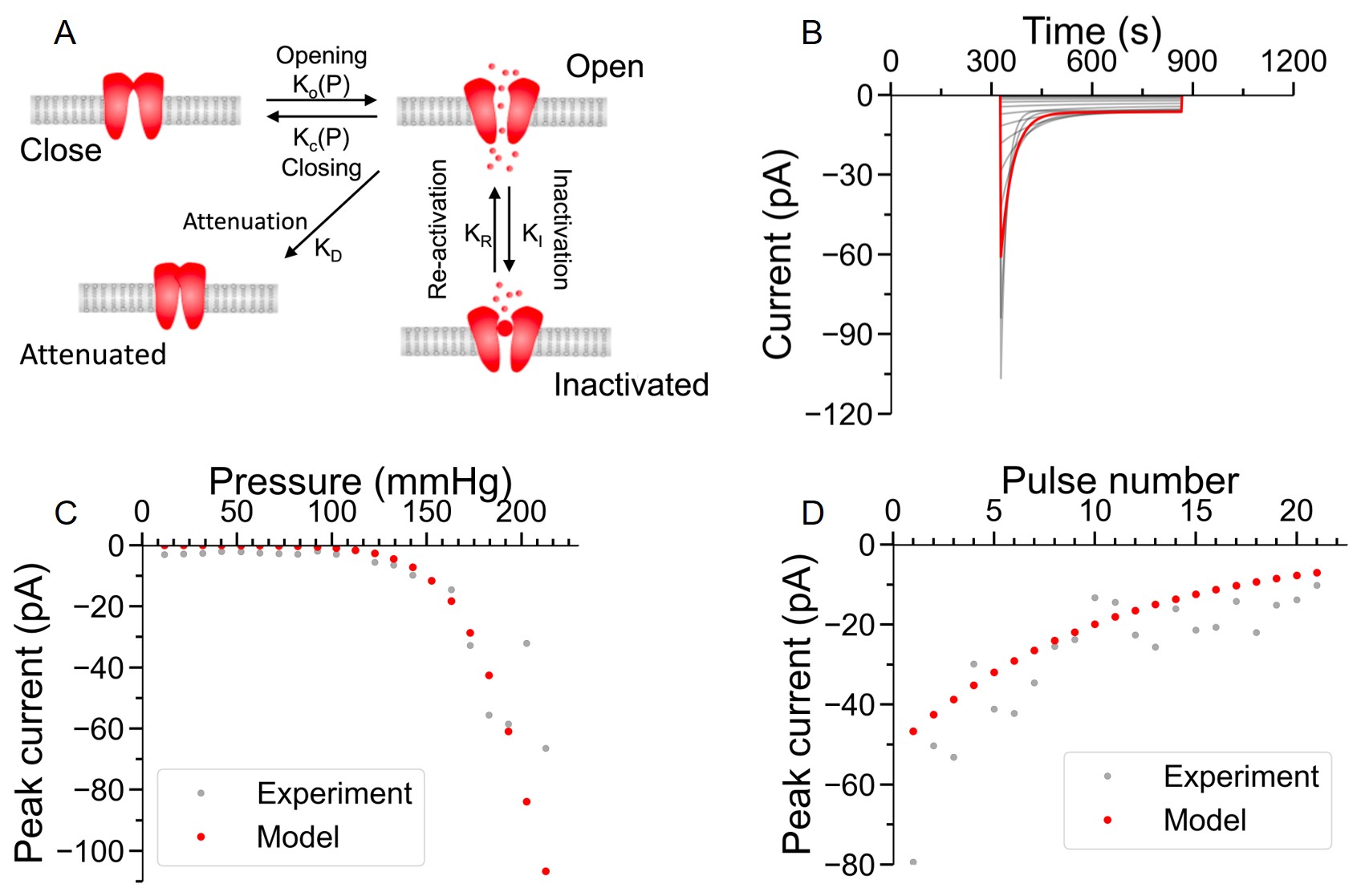
The Rapid Mechanically Activated channel transduces increases in plasma membrane tension into transient calcium influx
New Phytologist
In Arabidopsis, RMA ion channel is a candidate for mediating cytosolic calcium signaling in response to high frequency mechanical stimulation.
Plants respond to mechanical stimuli by a rapid increase in cytosolic calcium. The intensity and kinetics of the calcium changes define calcium signatures important for biological responses. In this study carried in the BioCell department of I2BC , we determine the properties of a calcium-permeable force-gated channel localized at the plasma membrane called Rapid Mechanically Activated (RMA).
Using patch clamp and pressure clamp, we characterized the kinetics of the Arabidopsis thaliana RMA channel upon stimulation by pressure pulses applied onto the plasma membrane. Combining pressure pulse protocols at different frequencies with modeling, we investigated the channel’s capacity to transduce high frequency mechanical stimuli.
The RMA channel rapidly activates in response to membrane tension, then it inactivates during prolonged stimulation. Upon repeated stimulations, the RMA current amplitude decreases irreversibly indicating that it undergoes attenuation. The channel kinetics were modeled with four chemical states and the model predicts that it behaves as a pass band filter in the 10 Hz–1 kHz range.
In conclusion, due to its activation/inactivation, the RMA channel is a candidate for mediating cytosolic calcium signaling in response to mechanostimulation. Its attenuation and filtering properties suggest its involvement in the transduction of high frequency mechanical stimulation, such as those produced by insects’ vibrations.
More information: http://doi.org/10.1111/nph.71241
Contact: Jean-Marie FRACHISSE <jean-marie.frachisse@i2bc.paris-saclay.fr>
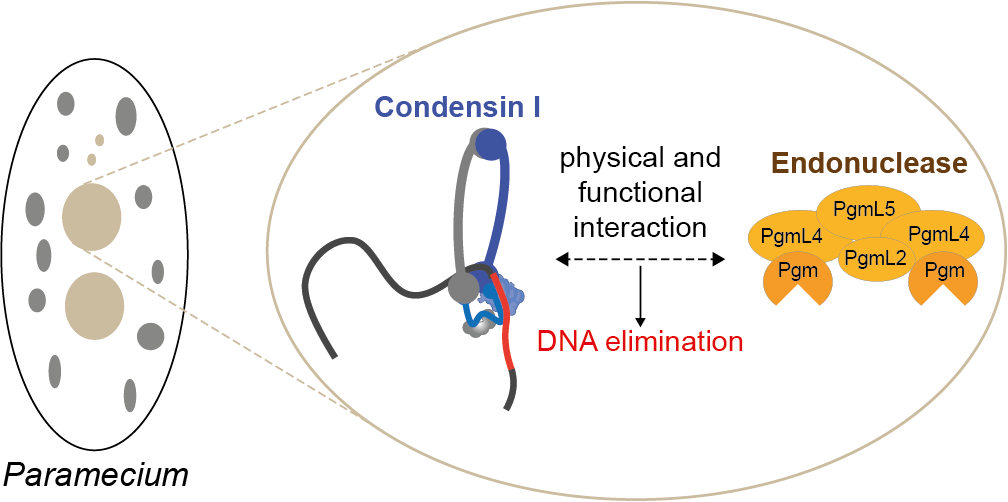
Programmed DNA Elimination in Paramecium: towards the third dimension
NAR
A condensin I complex, known for shaping chromosome organization in eukaryotes, is essential to DNA elimination in Paramecium.
During development, many organisms eliminate specific germline DNA sequences to shape their somatic genome. But how do cells target which sequences to remove? The team “Programmed Genome Rearrangements” has addressed this question in the ciliate Paramecium tetraurelia. Because of its nuclear dimorphism, this unicellular eukaryote provides a powerful model to study somatic differentiation at the genomic scale. At each sexual cycle, a new somatic macronucleus (MAC), specialized for gene expression, is formed from a copy of the germline micronucleus (MIC), inherited from the previous generation. This process involves the elimination of one third of germline sequences, including transposable elements and satellite DNA, to ensure proper gene function and progeny survival.
In collaboration with scientists from the Institut Jacques Monod, we have uncovered a surprising new role for a development-specific condensin I, a complex from the SMC family (Structural Maintenance of Chromosomes) generally known for organizing chromosomes in three dimensions. Using TurboID and protein co-immunoprecipitation, combined with quantitative mass spectrometry, we found that the developmental condensin I complex interacts with the PiggyMac (Pgm) endonuclease, an enzyme essential for cutting and removing specific germline DNA sequences during MAC development. High-throughput sequencing of the DNA extracted from purified new MACs revealed that when cells are depleted of condensin I, the germline genetic material is massively retained in the somatic genome. This demonstrates that condensin I plays a key part in programmed DNA elimination. Our discovery suggests that 3D genome organization may help target which sequences are removed. The condensin complex localizes to the developing new MAC, where it stabilizes Pgm and its partners. However, the exact level at which spatial genome architecture influences PDE remains an open question.
More information: https://doi.org/10.1093/nar/gkag351
Contact: Mireille Bétermier <mireille.betermier@i2bc.paris-saclay.fr>
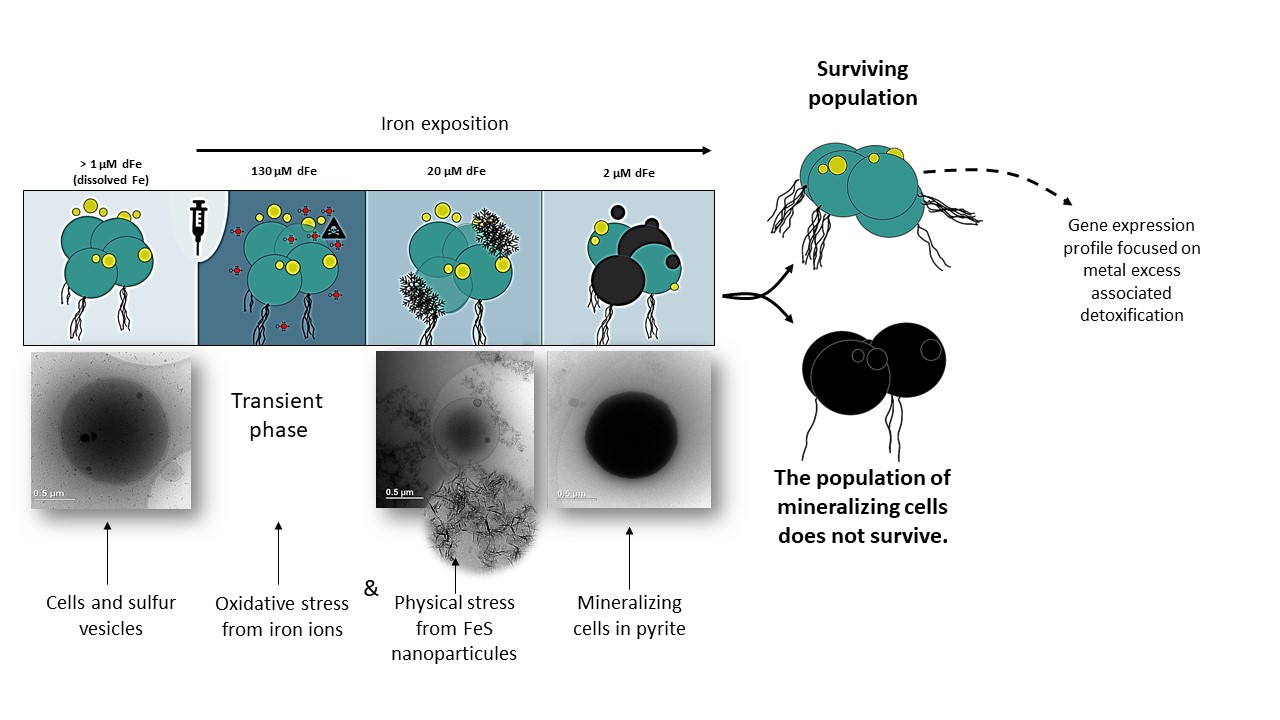
Iron Sulfides Produced by Thermococcales: An Iron
Detoxification Mechanism.
Environmental Microbiology
Thermococcales, hyperthermophilic archaea from hydrothermal vents, promote iron sulfide precipitation, enabling survival in iron-rich environments. Some cells become encrusted in pyrite and do not survive mineralization, while surviving cells activate metal detoxification genes.
Thermococcales, sulfur-reducing archaea inhabiting the hottest parts of hydrothermal vents, have evolved to thrive in environments rich in iron and sulfide species. In this study, using experimental analogues of sulfur-rich hydrothermal chimneys, we confirm previous suggestions that the precipitation of iron sulfide minerals promoted by Thermococcales contributes to a population-wide adaptation to reactive species induced by the presence of high levels of iron. In parallel with mineral phases identification, cellular metabolic activity was monitored during mineralization, revealing a mechanism in which a subpopulation of cells does not survive mineralization and becomes encrusted in pyrite, while the remaining living cells exhibit a gene expression profile focused on DNA repair and metal excess associated detoxification. Compared to abiotic conditions, Thermococcales induce a faster precipitation of dissolved iron, immobilising excess metal. Our results clarify the role of mineralizing cells in this survival mechanism, suggesting that this biomineralization process allows resilience to extreme chemical stress. Upon drastic levels of toxic dissolved iron, thanks to a population of mineralizing cells, the surviving Thermococcales are thus more likely to endure those still harsh environments. This complex mechanism is likely a key factor in the adaptation of microorganisms to the hottest environments of hydrothermal vents.
More information: https://doi.org/10.1111/1462-2920.70242
Contact: Aurore GORLAS <aurore.gorlas@i2bc.paris-saclay.fr>
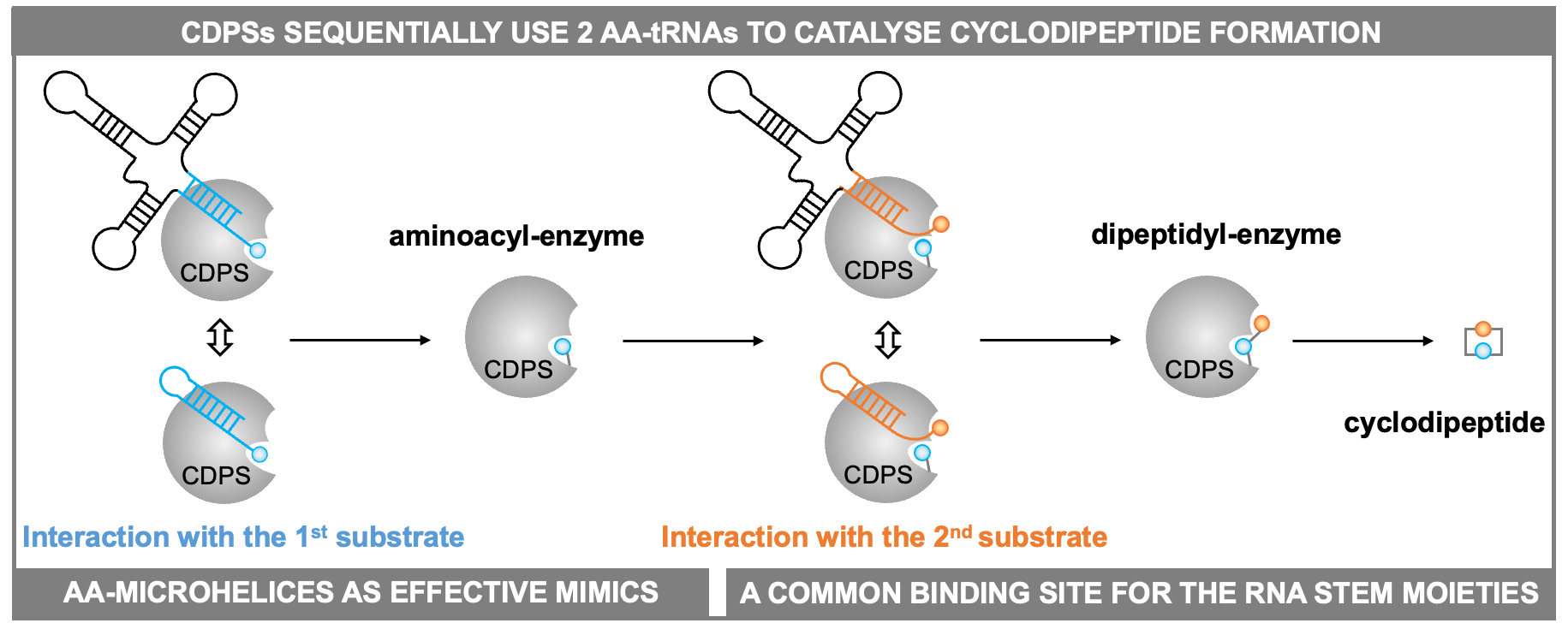
The tRNA moieties of both aminoacyl-tRNA substrates of a cyclodipeptide synthase share a common binding site, as revealed by RNA microhelices mimicking tRNA acceptor arms.
Nucleic Acids Research
Cyclodipeptide synthases (CDPSs) utilize two aminoacyl-tRNAs as substrates to produce diverse natural products. Here, we demonstrate that CDPSs efficiently recognize aminoacylated microhelices (miHxs) that mimic the tRNA acceptor arm. Structural and enzymological analyses using unacylated, misacylated, and engineered miHxs reveal a shared RNA-binding mode for both substrates. These findings establish miHxs as versatile tools to investigate CDPS function and, more broadly, other aminoacyl-tRNA–dependent enzymes.
Two teams from the I2BC, in collaboration with the ICSN, combined enzymological and structural approaches to investigate cyclodipeptide synthases (CDPSs), enzymes involved in natural product biosynthesis. CDPSs sequentially use two aminoacyl-tRNAs (AA-tRNAs) to catalyse cyclodipeptide formation. We previously showed that microhelices (miHxs), mimicking the tRNA acceptor arm, are as efficient as full-length AA-tRNAs when aminoacylated by flexizymes.
Here, we generated a diverse set of miHxs (acylated, unacylated, misacylated, mutated, or shortened) and analysed their interactions with CDPSs. We focused on the Nocardia brasiliensis CDPS (Nbra-CDPS), which synthesizes cyclo(L-Ala–L-Glu) from Ala-tRNAAla and Glu-tRNAGlu. Crystal structures of Nbra-CDPS bound to analogues of its first substrate, including unacylated and acylated miHxAla, were determined. Cryo-EM analysis confirmed that miHxs mimic the acceptor stem of full-length tRNAs.
We also solved the structure of Nbra-CDPS bound to unacylated miHxGlu, an analogue of the second substrate, and found that it superimposes well with miHxAla despite sequence differences. Together with results obtained using misacylated substrates, these data reveal a shared RNA-binding mode for both substrates. Our findings establish miHxs as powerful tools to dissect CDPS function and to study other AA-tRNA–dependent enzymes.
More information: https://doi.org/10.1093/nar/gkag307
Contact: Muriel GONDRY <muriel.gondry@i2bc.paris-saclay.fr> and Jean-Baptiste CHARBONNIER <jb.charbonnier@i2bc.paris-saclay.fr>
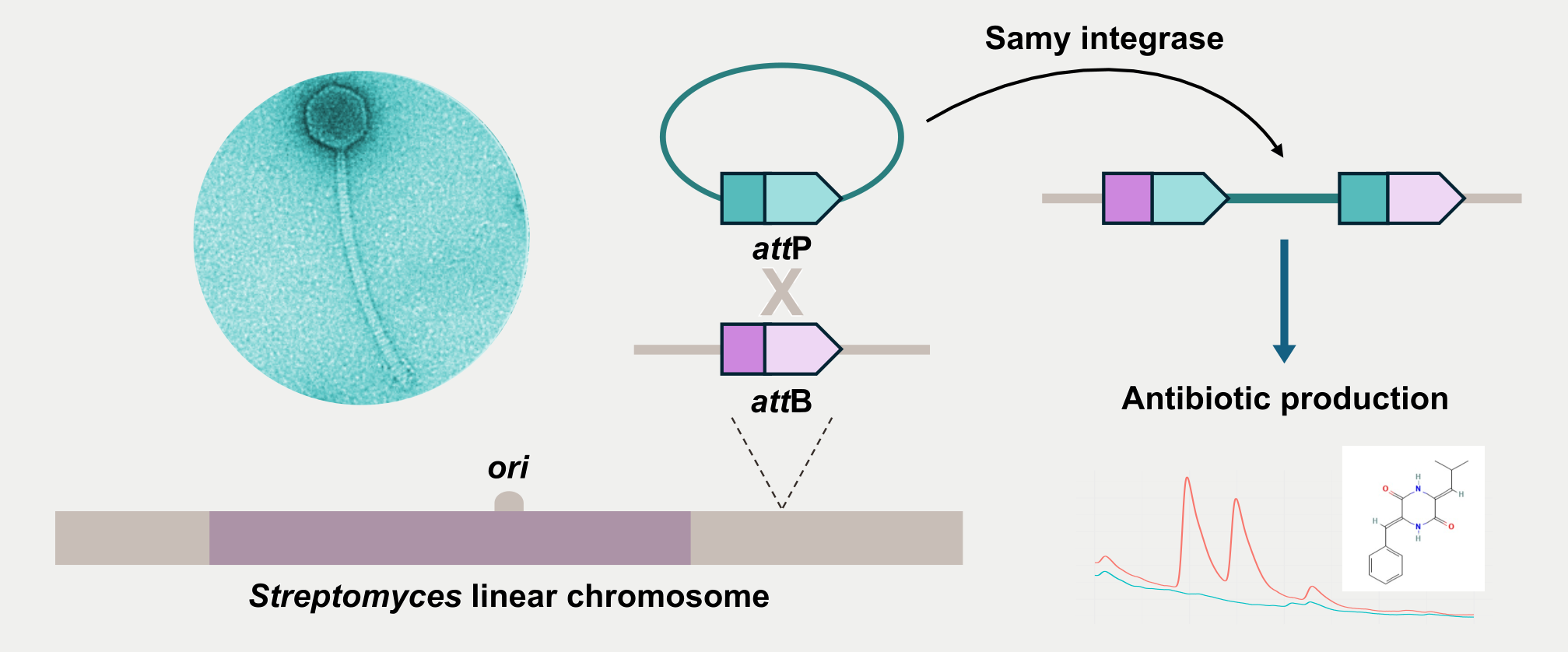
A new-engineered integrative tool to target the terminal compartment of the Streptomyces chromosome.
Applied Microbiology and Biotechnology
Pushing Streptomyces engineering to new frontiers! The Samy phage tool targets the chromosome’s farthest terminal regions, rich in specialized metabolite genes, enabling precise integration across strains. A breakthrough for antibiotic production like albonoursin.
Phages are a valuable resource for the genetic engineering of Streptomyces antibiotic-producing bacteria. Indeed, a few integrative vectors based on phage integrase are available to insert transgene at specific genomic loci. Chromosome conformation captures previously demonstrated that the Streptomyces linear chromosome is organized in two spatial compartments: The central compartment encompassing most conserved and highly expressed genes in exponential phase, and the terminal compartments enriched in poorly conserved sequences including specialized metabolite biosynthetic gene clusters. This study introduces a new integrative tool based on a recently described phage, Samy, which specifically targets the terminal compartment of its native host chromosome. Samy is related to PhiC31 phage and, like the latter, encodes a serine integrase. Whereas PhiC31 targets a site generally located near the origin of replication, the Samy integration site is one of the farthest known attB sites from it. The authors demonstrated that the Samy integrase efficiently mediates the specific integration of a non-replicating plasmid in six Streptomyces strains from distinct clades. Bioinformatic analyses revealed that the Samy-attB site is rather conserved, and located in the terminal compartment of most Streptomyces chromosomes. Finally, heterologous expression of the albonoursin biosynthetic gene cluster from the Samy-, PhiC31-, and R4-attB sites yields quantitatively equivalent levels of production, though qualitative differences were observed. Altogether, these results demonstrate that the att-int Samy system expands Streptomyces genetic engineering tools by enabling targeted integration in the terminal chromosomal compartment.
More information: https://link.springer.com/article/10.1007/s00253-026-13707-2
Contact: Stéphanie BURY-MONE <stephanie.bury-mone@i2bc.paris-saclay.fr>
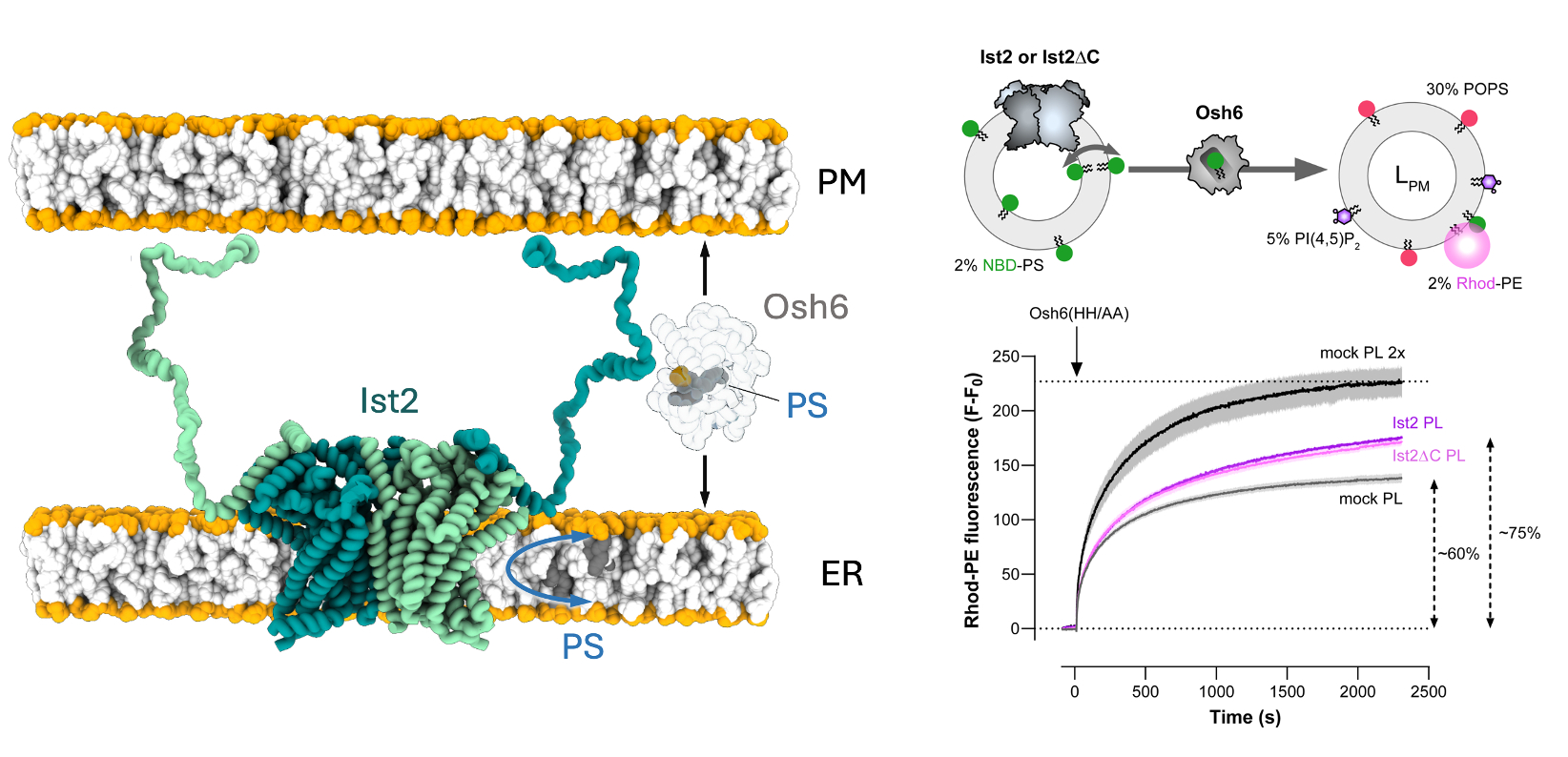
Phosphatidylserine dynamics between the endoplasmic reticulum and the plasma membrane in Saccharomyces cerevisiae.
Journal of Cell Biology
A functional partnership between a lipid scramblase and a lipid transfer protein in the regulation of phosphatidylserine homeostasis.
Phosphatidylserine is synthesised in the endoplasmic reticulum (ER), but this negatively charged lipid is highly concentrated in the plasma membrane (PM). There, it plays numerous roles in processes such as cell signalling and cell fusion, and it can also mediate apoptosis and synaptic pruning when exposed in the outer leaflet of the PM. In the yeast Saccharomyces cerevisiae, selective PS transport between the ER and the PM by the lipid transfer protein Osh6 is required for PS enrichment in the plasma membrane. Osh6 operates at membrane contact sites (MCS), where it interacts with the Ist2 protein embedded in the ER, tethering the ER to the PM via its long, disordered C-terminal tail.
In two studies conducted in collaboration with the CRBM (CNRS/University of Montpellier), the IPMC (CNRS/University of Nice Côte d’Azur), and the IBCP (CNRS/University of Lyon), we show that Ist2 is a membrane transporter that catalyses rapid lipid exchange across the two leaflets of the ER – acting as a lipid ‘scramblase’ – and that this scrambling activity sustains Osh6-mediated PS transfer between the ER and the PM.
First, we demonstrated that Ist2 catalyses the scrambling of different lipids in vitro after reconstituting purified Ist2 in proteoliposomes. Molecular dynamics simulations were then used to identify a cavity through which the lipid headgroup passes during transport from one leaflet to another. Further cellular studies revealed a close relationship between the COPII complex and the Ist2 protein. This was manifested by impaired yeast growth and vacuolar trafficking, as well as disruption of ER exit sites. We also found that Ist2 deletion stimulates the formation of ER-derived lipid droplets and changes their composition. Finally, using artificial, reconstituted ER-PM contact sites, we demonstrated that Ist2-mediated lipid scrambling sustains Osh6-mediated lipid transfer.
Together, our studies identify Ist2 as a lipid scramblase and establish that lipid scrambling in the ER by Ist2 controls various cellular functions, such as vesicular transport and lipid droplet homeostasis. This highlights the importance of lipid dynamics for ER function. Furthermore, we reveal a functional partnership between Ist2-mediated lipid scrambling and Osh6-mediated lipid transfer at MCS.
More information: https://rupress-org.insb.bib.cnrs.fr/jcb/article/225/2/e202502112/278759/Ist2-is-a-phospholipid-scramblase-that-links-lipid
Contact: Guillaume LENOIR <guillaume.lenoir@i2bc.paris-saclay.fr>

A full program on France Culture about autophagy
France Culture
Autophagy was recently featured for almost an hour on the program La Science, CQFD, broadcast on France Culture on
March 3rd. You can listen to this episode, entitled “Autophagy: I eat myself, therefore I live,” on the Radiofrance app or by following the link below:
In this fascinating and instructive episode, Natacha Triou, science journalist and producer, interviews several researchers from our community:
– Audrey Esclatine, current president of the Club Francophone de l’Autophagie (CFATG), professor at Paris Saclay University, and researcher at I2BC.
– Flavie Strappazzon, also a member of the CFATG board and researcher at the Institut NeuroMyogène in Lyon.
– Pierre-Emmanuel Joubert, member of the organizing committee of the CFATGXIII congress in Paris and lecturer at Sorbonne University
Throughout the discussion, they revisit the fundamental mechanisms of autophagy and its role in physiology, particularly in development and aging. Together, they discuss the links between autophagy and numerous pathologies, such as cancer and neurodegenerative diseases, and finally they talk about the research prospects that are currently shaping this rapidly expanding scientific field.
Contact: Audrey ESCLATINE <audrey.esclatine@i2bc.paris-saclay.fr>
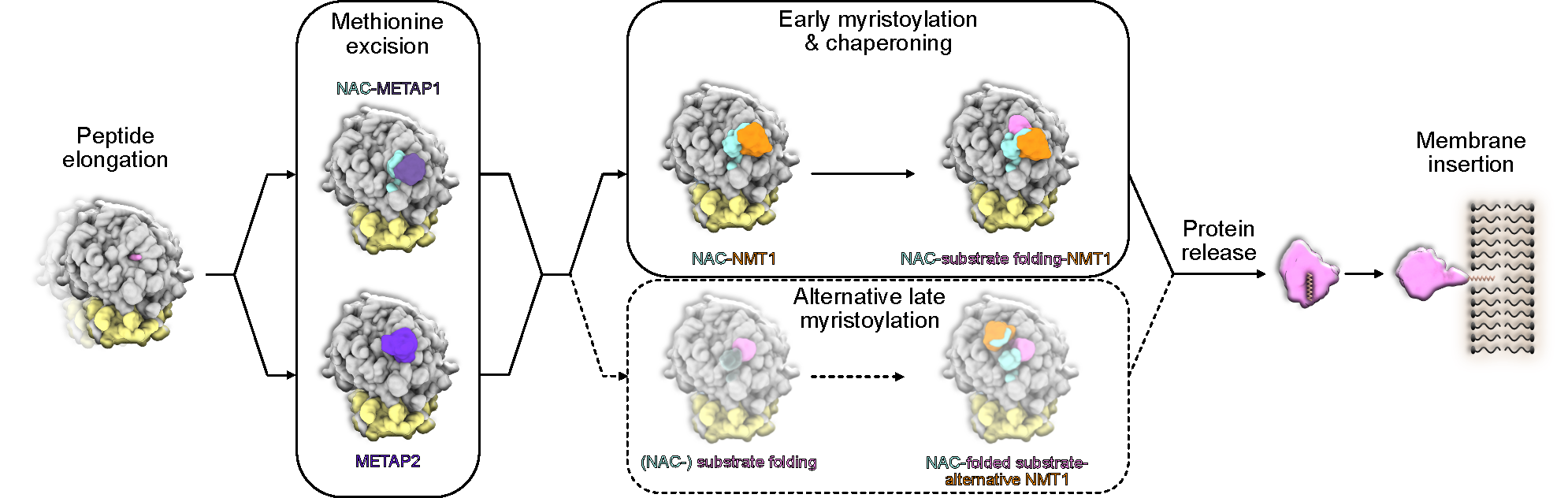
Snapshots of cotranslational N-myristoylation reveal NMT as a ribosome-associated chaperone
Nature Communications
NMT in a new light: associated with the ribosome via the NAC complex, this enzyme not only adds lipid tags to the N-termini of nascent proteins but also acts as a chaperone, cooperating with MetAPs to ensure proper folding and delivery.
N-myristoylation is an essential cotranslational lipid modification catalyzed by N-myristoyltransferases (NMTs). Structural and cellular analyses reveal that NMT1 associates with the ribosomal tunnel exit via the nascent polypeptide–associated complex (NAC) and acts sequentially after MetAP-mediated initiator methionine removal, in contrast to previously described simultaneous cotranslational modification assemblies. Unexpectedly, NMT1 also exhibits chaperone-like activity, expanding its functional repertoire in cotranslational protein biogenesis.
More information: https://www-nature-com.insb.bib.cnrs.fr/articles/s41467-025-67962-4
Contacts: Thierry MEINNEL <thierry.meinnel@i2bc.paris-saclay.fr> and Carmela GIGLIONE <carmela.giglione@i2bc.paris-saclay.fr>
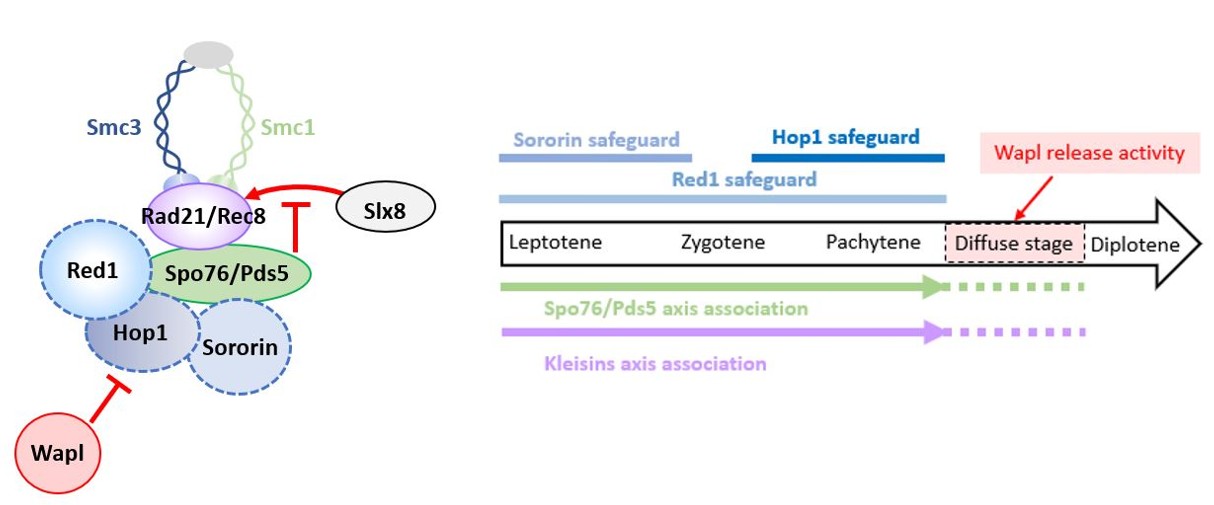
Crosstalk between cohesins and axis proteins determines meiotic chromosome architecture in Sordaria macrospora
Plos Genetics
Discovery: a dynamic interplay between axis proteins and cohesins ensures chromosome stability during meiosis in Sordaria.
Faithful chromosome segregation during meiosis requires the coordinated action of cohesin complexes and chromosome axis proteins. How these factors interact and communicate along chromosome axes, especially during meiotic prophase I, remains however, only partially understood. We therefore investigated the functional interplay between the cohesin components and regulators (Rad21, Rec8, Wapl, Sororin, Spo76/Pds5) and two meiosis-specific axis proteins Red1 and Hop1. Analysis of multiple combinations of their corresponding null mutants and of their genetic-epistasis interactions in the fungus Sordaria macrospora revealed a hierarchical regulatory network for their recruitment and releasing. This work uncovers an unexpected role of axis proteins Red1 and Hop1, that together with Sororin, provide stage-specific protection of Spo76/Pds5 against Wapl-mediated release. Furthermore, we identify that Spo76/Pds5 is the main target of Wapl and acts as a central guardian of kleisin stability against Slx8/STUbL-dependent proteasomal degradation. Together, our findings show that dynamic crosstalk between axis proteins and cohesins is crucial to preserve axis integrity and to ensure accurate meiotic progression.
More information: https://pubmed-ncbi-nlm-nih-gov.insb.bib.cnrs.fr/41433359/
Contact: Stéphanie BOISNARD <stephanie.boisnard@i2bc.paris-saclay.fr>
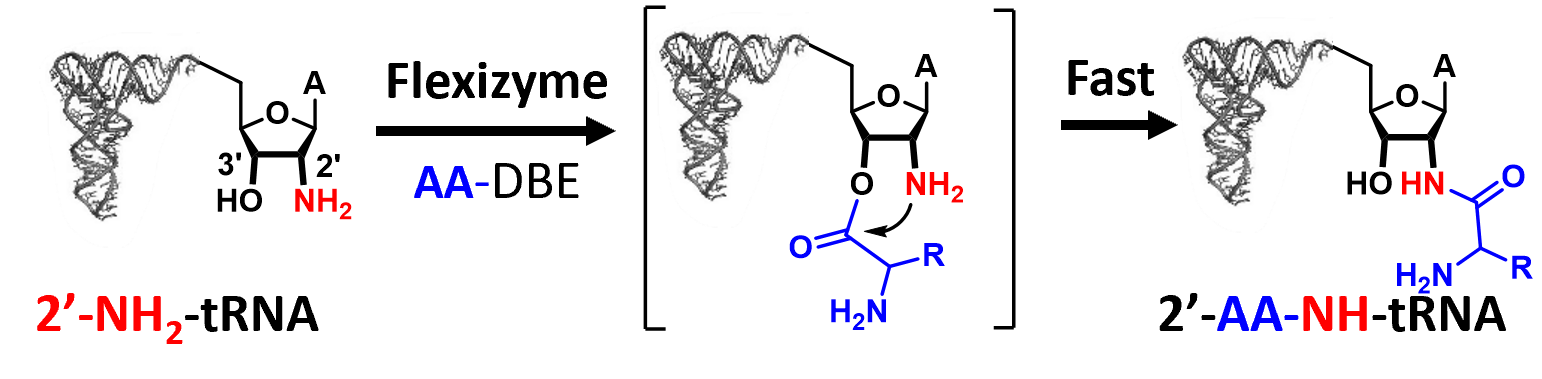
Flexizyme-Based Strategy for the Synthesis of Stable, Non-Isomerizable Amide-Linked 2’-Aminoacyl-tRNAs and their Shortened Analogs
Chemistry Europe
We developed a flexizyme-based semi-synthetic strategy that provides access to stable 2′- and 3′-amide AA-tRNA analogs, offering robust tools for structural biology and for probing regiospecificity in AA-tRNA-dependent enzymes.
The study of the regiospecificity of aminoacyl-tRNA (AA-tRNA)-dependent enzymes and their structural characterization with AA-tRNAs are limited by rapid hydrolysis of the ester bond linking amino acid to tRNA. To overcome this limitation, stable AA-tRNA analogs bearing hydrolysis-resistant linkages, such as amide bonds or ester bioisosteres, have been developed. These analogs are valuable tools for investigating interactions between AA-tRNAs and various enzymes or ribonucleoproteins, including elongation factors, ribosomes, Fem-family transferases, and cyclodipeptide synthases. However, their synthesis remains technically challenging. Recently, flexizymes—engineered ribozymes capable of aminoacylating tRNAs with diverse amino acids or analogs—have enabled the synthesis of 3′-amide-linked AA-NH-tRNAs. Due to their inherent specificity for 3′-OH acylation, flexizymes have not been used to generate 2′-amide-linked analogs, and such regioisomers have remained unexplored. In this study, we demonstrate that while flexizymes cannot directly aminoacylate the 2′ position, they can nevertheless mediate the synthesis of 2′-aminoacyl-NH-tRNAs via a two-step regioisomerization mechanism with excellent yields. This finding provides new insights into the binding mode of AA-tRNAs to flexizymes and expands the chemical space of stable AA-tRNA analogs. Access to both 3′- and 2′-amide regioisomers will enable more precise studies of AA-tRNA recognition and catalysis by various AA-tRNA-dependent systems.
More information: https://chemistry-europe.onlinelibrary.wiley.com/doi/10.1002/chem.202503506
Contact: Matthieu FONVIELLE <matthieu.fonvielle@i2bc.paris-saclay.fr>
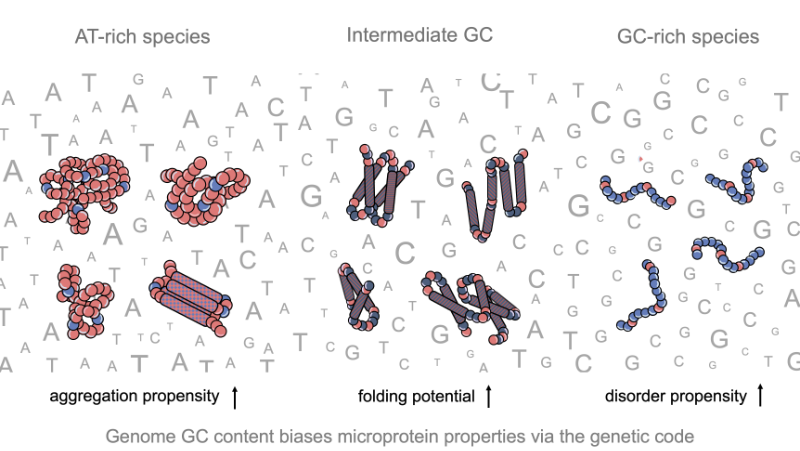
Impact of GC content on de novo gene birth
Nature Communications
Noncoding DNA can generate microproteins, some of which evolve into new genes. We show that de novo genes preferentially originate from GC-rich, foldable sequences, revealing how base composition channels the birth of new proteins.
Noncoding regions of eukaryotic genomes are widely transcribed and constitute a major source of novel microproteins, some of which eventually become fixed as de novo genes – a process known as de novo gene birth that plays a significant role in species adaptation. However, the structural properties of these nascent proteins and the factors governing their evolutionary fate remain poorly understood. In particular, the role of genome nucleotide composition (GC content) in shaping their biophysical properties has remained unclear. Here, we analyzed the foldability and sequence properties of millions of putative microproteins encoded by intergenic open reading frames (ORFs) from 3,379 eukaryotic species spanning a broad range of GC contents (18–79%). We show that GC content strongly influences amino-acid composition and structural tendencies, suggesting distinct cellular impacts if non-genic regions are pervasively expressed. AT-rich species predominantly encode ORFs biased toward hydrophobic, aggregation-prone sequences, whereas GC-rich species tend to encode more hydrophilic, disorder-prone ORFs. ORFs from genomes with intermediate GC content display a more balanced composition and higher folding potential, with many expected to adopt proto-folds. To assess how these properties relate to gene emergence, we traced the evolutionary history of several hundred de novo proteins across 22 species using phylostratigraphy, targeted de novo gene searches, and ancestral sequence reconstruction. We find that de novo genes preferentially originate from GC-rich ORFs with intrinsic folding potential. Together, our results reveal that the interplay between GC content and foldability – rooted in the structure of the genetic code – shapes the emergence of novel genes.
More information: https://www.nature.com/articles/s41467-025-68022-7
Contact: Anne LOPES <anne.lopes@i2bc.paris-saclay.fr>
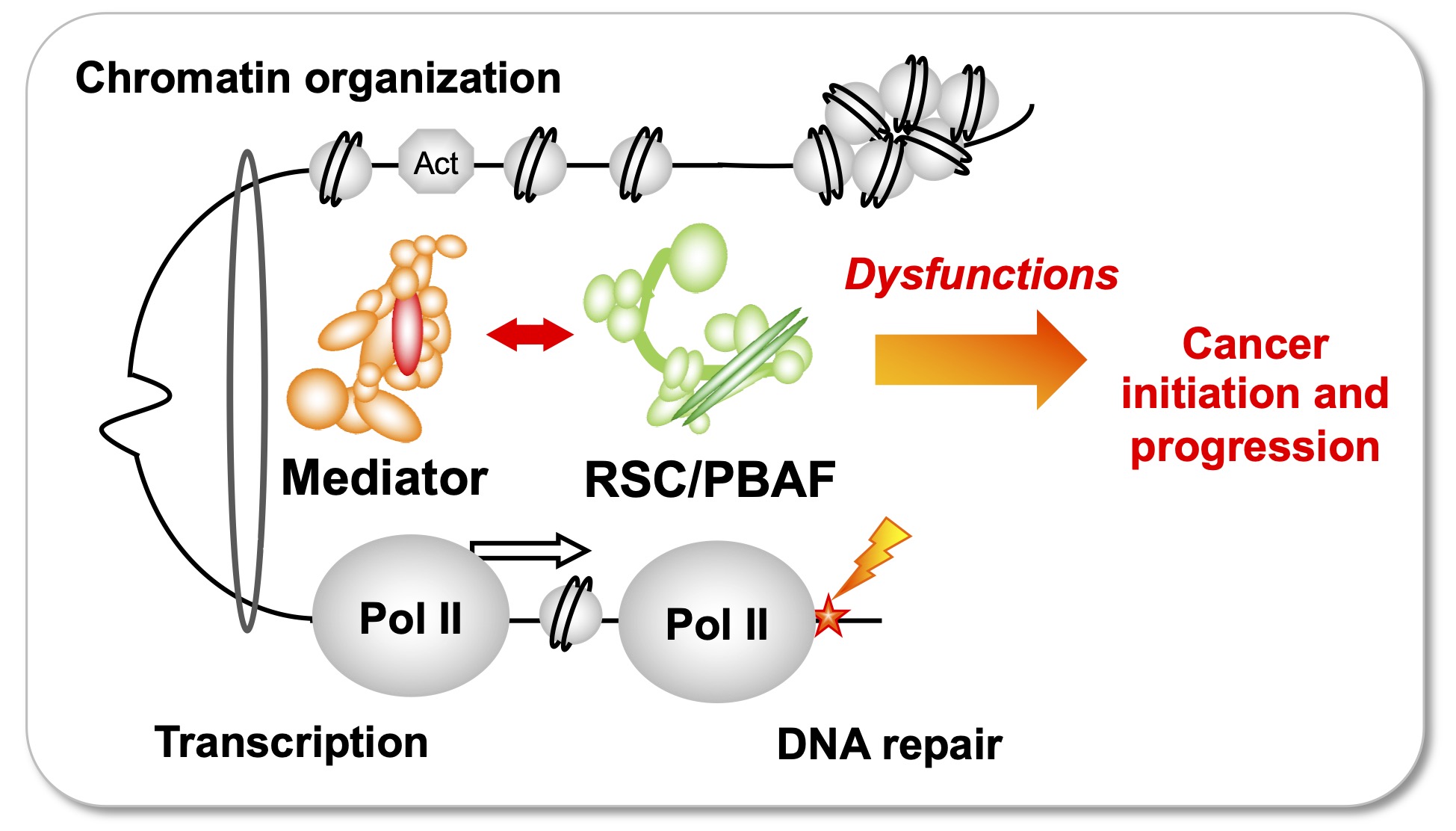

Understand how the essential complexes, the coregulator Mediator and the chromatin remodeling complex RSC/PBAF, cooperate in the nucleus.
In eukaryotes, transcription and DNA repair occur in the crowded context of chromatin. Dysfunctions of these processes can lead to cancers. Mediator is an essential and conserved multisubunit coactivator complex, mutated in many cancers. However, it remains largely unknown how Mediator and chromatin regulators coordinate their functions. Our recent publication suggests the novel hypothesis that Mediator acts in conjunction with the chromatin remodeling complex RSC (Remodels the Structure of Chromatin) of SWI/SNF family, homologous to PBAF (Polybromo-associated BAF) in human, representing the most frequently mutated complexes in cancers. In this project supported by Ligue Nationale contre le cancer, using the yeast model with a perspective to extend the study to human cells, we intend to decipher the molecular mechanisms involved in functional cooperation between these essential coregulator complexes in transcription regulation, DNA repair and chromatin organization relevant for cancer biology.
Contact: Julie SOUTOURINA <julie.soutourina@i2bc.paris-saclay.fr>

Actomyosin-dependent assembly of the mechanosensitive machinery from adherens junctions triggers actin polymerization and organization
ScienceAdvances
Adherens junction mechanosensing.
To form tissues, cells adhere to one another through structures known as adherens junctions. These junctions have the ability to adapt to the mechanical variations to which tissues are subjected, thereby preserving their integrity.
In this study published in Science Advances, we studied this mechanism by combining various biochemical approaches, including an unprecedented in vitro reconstitution involving surface micropatterning and up to eight purified proteins.
We show that contraction of the actomyosin cytoskeleton is sufficient to trigger the assembly of three key proteins—α-catenin, vinculin, and VASP. Once associated, these proteins cooperate to polymerize and reorganize actin.
These findings reveal how adherens junctions sense and adapt to mechanical forces exerted by the cytoskeleton by strengthening their connection to it, thereby contributing to tissue cohesion and stability..
More information: https://www.science.org/doi/10.1126/sciadv.ady4863
Contact: Christophe LE CLAINCHE <christophe.leclainche@i2bc.paris-saclay.fr>

The heme A synthase Cox15, as a target of redox-active 3-benzylmenadiones with antiparasitic activity
Antimicrobial Agents and Chemotherapy
We identified a new target for antiparasitic compounds and it is in the mitochondria.
Chagas disease, caused by Trypanosoma cruzi, is a neglected parasitic infection. The very limited arsenal of anti-T. cruzi treatments calls for the development of new drugs. Recently, a library of 3-benzylmenadione derivatives was synthesized with cruzidione being the most efficient and specific compound against the parasite. To decipher its mode of action, we used the yeast Saccharomyces cerevisiae as model. Evidence pinpointed at the heme A synthase Cox15 as a primary target of cruzidione: 1) a mutation in Cox15 (i.e., S429F) renders the yeast cells highly sensitive to the drug, 2) treatment with cruzidione led to the loss of cytochrome c oxidase, an enzyme that relies on heme A as an essential cofactor and 3) replacement of the yeast Cox15 by T. cruzi enzyme resulted in a high sensitivity to cruzidione. We then investigated the effect of cruzidione in T. cruzi and observed a significant reduction of heme contents, most likely involving the inhibition of the heme A synthase. This, in turn, led to a decrease in O2 consumption by the parasite. Finally, using the yeast model, we showed that, similarly to what we previously found for the antimalarial benzylmenadione plasmodione, NADH-dehydrogenase plays a key role in cruzidione bioactivation. We proposed that the reduced benzoylmenadione metabolites produced by the reaction with NADH-dehydrogenase, act as Cox15 inhibitors. This study, through the identification of the mode of action of cruzidione, highlighted Cox15 as a novel target for antiparasitic drugs.
More information: https://journals.asm.org/doi/10.1128/aac.01161-25
Contact: Brigitte MEUNIER <brigitte.meunier@i2bc.paris-saclay.fr>

How virulence genes reorganize the Salmonella genome
Nature Communications
Using functional genomics in sorted Salmonella populations and high-resolution microscopy, the authors show that the expression of Pathogenicity Island 1 is associated with chromatin remodeling and with the repositioning of this region toward the nucleoid periphery.
Chromatin provides a universal framework for organizing and regulating genomes across the three domains of life. In bacteria, it is composed of intrinsically supercoiled DNA associated with small DNA-binding proteins known as nucleoid-associated proteins (NAPs). Their binding can induce DNA bending, bridging, coating, and/or wrapping, giving rise to distinct modes of chromatin organization.
Bacterial chromatin can exist in a repressed state (silent chromatin) or in an actively transcribed state (active chromatin). Silent chromatin is largely associated with H-NS, a xenogeneic silencer that restricts the costly expression of genes acquired by horizontal transfer. In contrast, active chromatin is densely occupied by RNA polymerase and is characterized by different levels of DNA supercoiling. However, the changes in protein occupancy and chromatin organization that accompany transitions between these two states remain poorly understood.
Researchers of the Genome Biology Department of the I2BC in collaboration with the NGS and the Imaging facility of the I2BC and the Trinity College Dublin (Ireland), have unveiled the chromatin organization of horizontally acquired regions in Salmonella enterica serovar Typhimurium, which are essential for its pathogenicity. They show that expression of Pathogenicity Island 1 (SPI-1) is accompanied by local chromatin remodeling, marked by profound changes in three-dimensional organization and protein occupancy. This remodeling is also associated with the repositioning of SPI-1 toward the nucleoid periphery.
These findings provide new insights into the interplay between xenogeneic silencing, counter-silencing mechanisms, chromatin architecture, and the evolutionary integration of acquired DNA. They also reveal a finely tuned chromatin remodeling process that minimizes the cellular cost of activating pathogenicity islands, and they establish a direct link between the linear (1D) organization of the genome and its three-dimensional (3D) folding.
More information: https://www.nature.com/articles/s41467-025-67746-w
Contact: Virginia LIOY <virginia.lioy@i2bc.paris-saclay.fr>

Gain and loss of gene function shaped the nickel hyperaccumulation trait in Noccaea caerulescens
The Plant Cell
Plants that hyperaccumulate nickel open the possibility to mine this metal from soils in an environmetally friendly manner. In this study, sequencing of a nickel hyperaccumulating plant together with genomic and transcriptomic comparisons reveal the molecular mechanisms underlying this extreme trait.
Nickel hyperaccumulation is an extreme adaptation to ultramafic soils observed in more than 500 plant species. However, our
understanding of the molecular mechanisms underlying the evolution of this trait remains limited. To shed light on these
mechanisms, we have generated a high-quality genome assembly of the metal hyperaccumulator Noccaea caerulescens. We then used
this genome as reference to conduct comparative intraspecific and interspecific transcriptomic analyses using various accessions of
N. caerulescens and the non-accumulating relative Microthlaspi perfoliatum to identify genes associated with nickel hyperaccumulation.
Our results suggest a correlation between nickel hyperaccumulation and a decrease in the expression of genes involved in defense
responses and the regulation of membrane trafficking. Surprisingly, these analyses did not reveal a significant enrichment of genes
involved in the regulation of metal homeostasis. However, we found that the expression levels of selected metal transporter genes,
namely, NcHMA3, NcHMA4, and NcIREG2, are consistently elevated in N. caerulescens accessions hyperaccumulating nickel.
Furthermore, our analyses identified frameshift mutations in NcIRT1 associated with the loss of nickel hyperaccumulation in a few
accessions. We further showed that the expression of a functional NcIRT1 in the roots of the La Calamine accession increases nickel
accumulation in shoots. Our results demonstrate that NcIRT1 participates in nickel hyperaccumulation in N. caerulescens. They also
suggest that nickel hyperaccumulation is an ancient trait in N. caerulescens that has evolved from the high and constitutive expression
of several metal transporters, including NcIREG2, and that the trait was subsequently lost in a few accessions due to mutations in NcIRT1.
More information: https://doi.org/10.1093/plcell/koaf281
Contact: Sébastien THOMINE <sebastien.thomine@i2bc.paris-saclay.fr>

Cross-regulation of iron-sulfur cluster biosynthesis by frataxin and ferredoxin-2
Nature
Tight regulation of Fe-S clusters biosynthesis via a mutually antagonistic binding of frataxin and ferredoxin-2 to the assembly machinery, with several important implications for the Friedreich’s ataxia disease caused by frataxin deficiency.
Iron-sulfur (Fe-S) clusters are essential metallocofactors that perform a multitude of biological functions. They are synthesized de novo by multi-proteins machienries and any defect in their synthesis leads to severe diseases such as Friedreich’s ataxia (FRDA), caused by defective expression of frataxin (FXN). Here, we uncover that efficient [2Fe-2S] cluster assembly requires a fine-tuned balanced ratio of FXN and Ferredoxin-2 (FDX2), an essential enzyme of the assembly process. [2Fe-2S] clusters are assembled on the scaffold protein ISCU2 with sulfur provided as a persulfide by NFS1, which is cleaved into sulfide by FDX2. FXN stimulates the whole process by accelerating persulfide transfer to ISCU2. Using an in vitro reconstituted human system, we show that any deviation from a close-to-equal amount of FXN or FDX2 downregulates Fe-S cluster synthesis. We performed a structure-function investigation, which revealed that this is due to competition between FXN and FDX2 for the same binding site on the NFS1-ISCU2 complex. We found that higher levels of FXN impair the persulfide-reductase activity of FDX2 and higher levels of FDX2 slow FXN-accelerated persulfide transfer to ISCU2. We also discovered that FDX2 directly hinders persulfide generation and transfer to ISCU2 by interacting with the persulfide-carrying mobile loop of NFS1. We further found that knocking-down FDX2 expression in a FRDA drosophila model, increases fly lifespan. Altogether, this work highlights a direct regulation of Fe-S cluster biosynthesis through antagonistic binding of FXN and FDX2 and suggests that decreasing FDX2 in the context of FXN deficiency in FRDA might constitute a novel therapeutic axis.
More information: https://www.nature.com/articles/s41586-025-09822-1
Contact: Benoit D’AUTRÉAUX <benoit.dautreaux@i2bc.paris-saclay.fr>